Reflected Cross-Site Scripting (XSS) in /admin/Add notice/batch-notice.php via $_SERVER['PHP_SELF']
Describe the bug
A reflected Cross-Site Scripting (XSS) vulnerability exists in /admin/Add notice/batch-notice.php at line 190. The script uses the unsanitized $_SERVER['PHP_SELF'] variable as the form action attribute, allowing an attacker to inject arbitrary JavaScript code through a crafted URL.
Steps to reproduce
- Log in to the admin panel using the preset admin account (username:
admin, password: admin123).
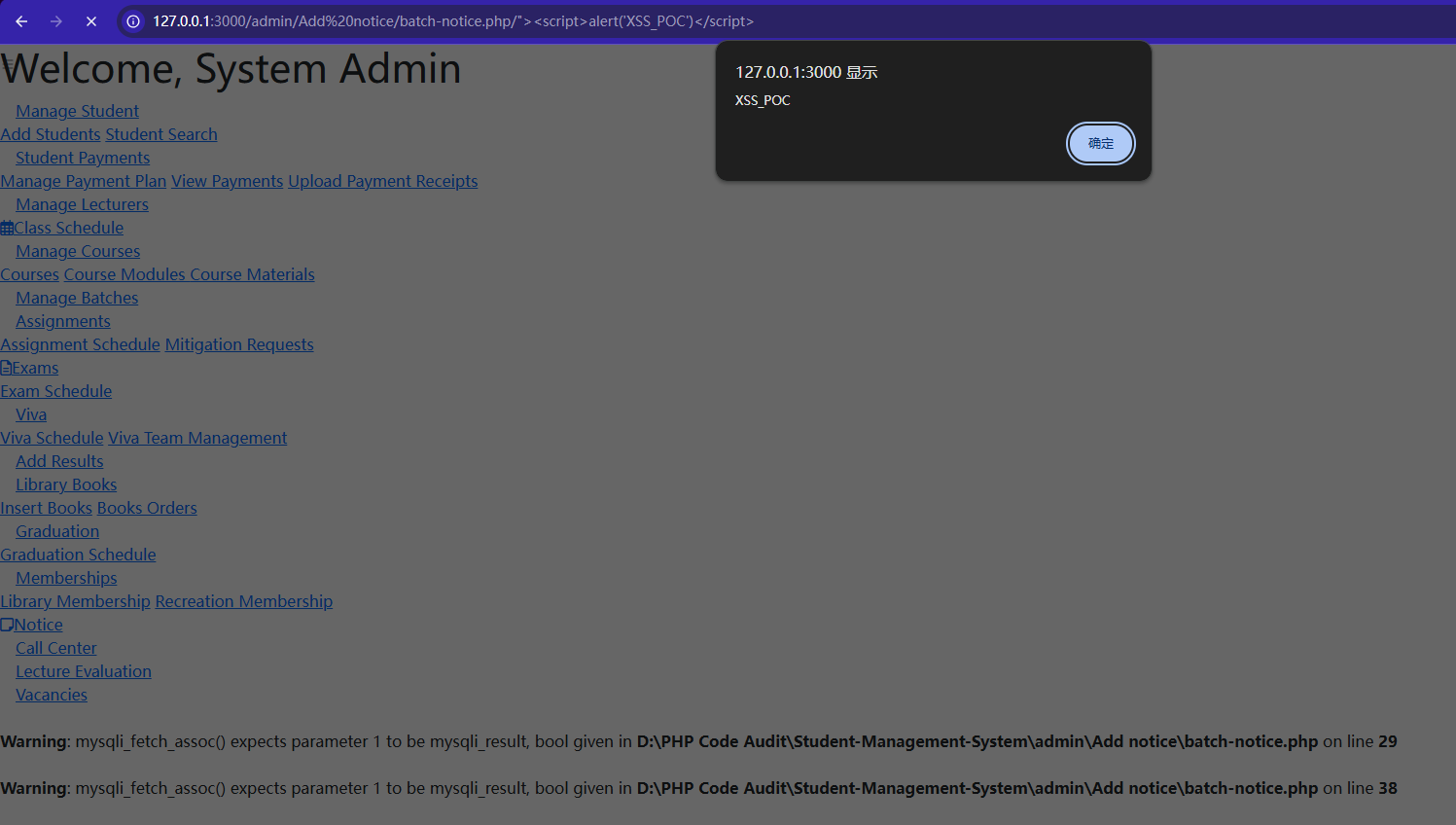
- Access the following crafted URL in a browser (the vulnerable page is only accessible after login):
http://127.0.0.1:3000/admin/Add%20notice/batch-notice.php/%22%3E%3Cscript%3Ealert('XSS_POC')%3C/script%3E
- The browser will execute the injected JavaScript and display an alert box with the text
XSS_POC, confirming the vulnerability.
The malicious code can be replaced with more harmful scripts (e.g., to steal cookies, perform phishing, or hijack the admin session).
Describe the solution
To fix this vulnerability, the action attribute should not directly output user-controllable input. Instead, use a hardcoded relative URL or properly sanitize the output.
Recommended fix:
- Replace
<?php echo $_SERVER['PHP_SELF']; ?> with a static value, such as "" (post to same page) or "batch-notice.php".
- If dynamic values are necessary, use
htmlspecialchars() to encode output:
<?php echo htmlspecialchars($_SERVER['PHP_SELF'], ENT_QUOTES, 'UTF-8'); ?>
Screenshots

Reflected Cross-Site Scripting (XSS) in /admin/Add notice/batch-notice.php via $_SERVER['PHP_SELF']
Describe the bug
A reflected Cross-Site Scripting (XSS) vulnerability exists in
/admin/Add notice/batch-notice.phpat line 190. The script uses the unsanitized$_SERVER['PHP_SELF']variable as the form action attribute, allowing an attacker to inject arbitrary JavaScript code through a crafted URL.Steps to reproduce
admin, password:admin123).http://127.0.0.1:3000/admin/Add%20notice/batch-notice.php/%22%3E%3Cscript%3Ealert('XSS_POC')%3C/script%3E
XSS_POC, confirming the vulnerability.The malicious code can be replaced with more harmful scripts (e.g., to steal cookies, perform phishing, or hijack the admin session).
Describe the solution
To fix this vulnerability, the
actionattribute should not directly output user-controllable input. Instead, use a hardcoded relative URL or properly sanitize the output.Recommended fix:
<?php echo $_SERVER['PHP_SELF']; ?>with a static value, such as""(post to same page) or"batch-notice.php".htmlspecialchars()to encode output:<?php echo htmlspecialchars($_SERVER['PHP_SELF'], ENT_QUOTES, 'UTF-8'); ?>Screenshots
