
Honey Badger Stability for Deeper, More Stable Neural Networks.




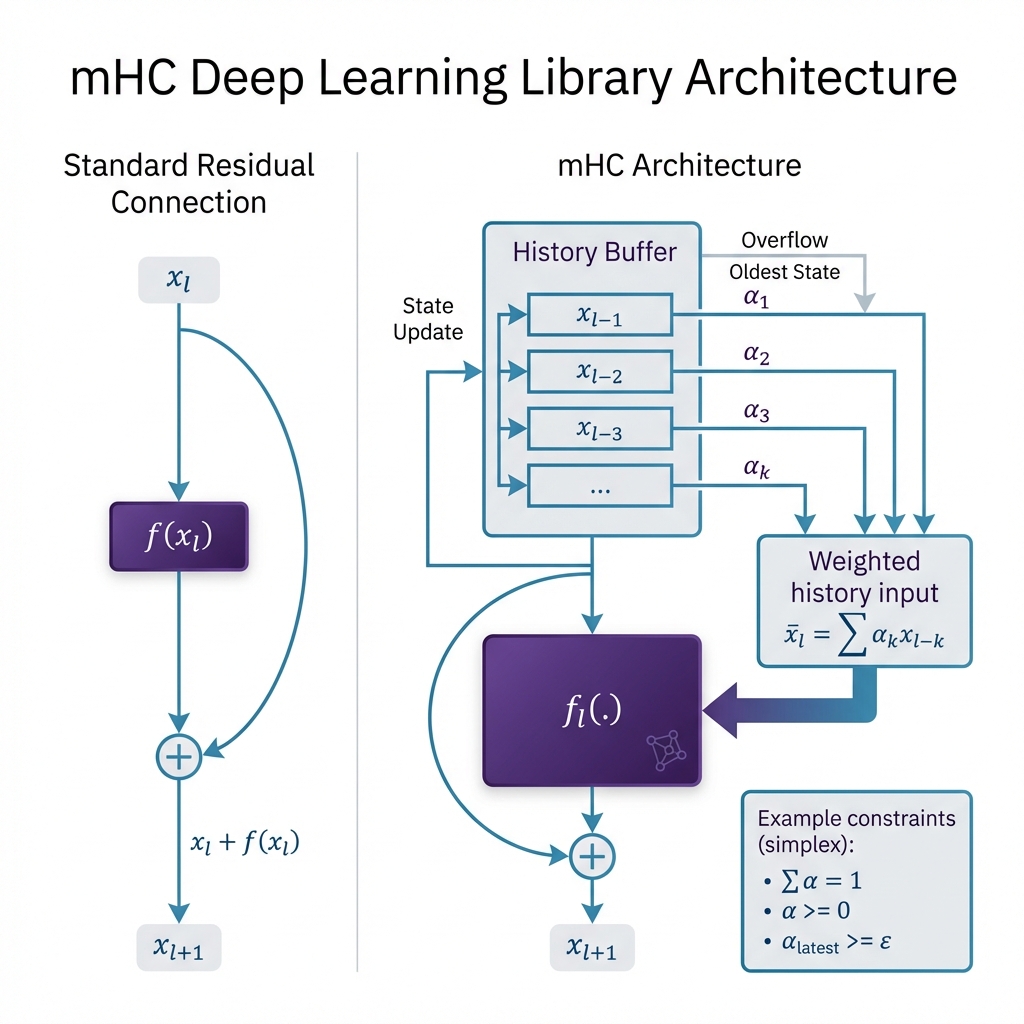
mhc is a next-generation PyTorch library that reimagines residual connections. Instead of simple one-to-one skips, mHC learns to dynamically mix multiple historical network states through geometrically constrained manifolds, bringing Honey Badger toughness to your gradients.
| 🚀 High Performance | 🧠 Smart Memory | 🛠️ Drop-in Ease |
|---|---|---|
| Reach deeper than ever before with optimized gradient flow. | Dynamically mix past states for richer feature representation. | Transform any model to mHC with a single line of code. |
“We recommend uv for faster and reproducible installs, but standard pip is fully supported.”
# Using pip (standard)
pip install mhc
# Using uv (faster, recommended)
uv pip install mhc# Visualization utilities
pip install "mhc[viz]"
uv pip install "mhc[viz]"
# TensorFlow support
pip install "mhc[tf]"
uv pip install "mhc[tf]"import torch
from mhc import MHCSequential
# Create a model with mHC skip connections
model = MHCSequential([
nn.Linear(64, 64),
nn.ReLU(),
nn.Linear(64, 64),
nn.ReLU(),
nn.Linear(64, 32)
], max_history=4, mode="mhc", constraint="simplex")
# Use it like any PyTorch model
x = torch.randn(8, 64)
output = model(x)Transform any model to use mHC with one line:
from mhc import inject_mhc
import torchvision.models as models

model = models.resnet50(pretrained=True)
inject_mhc(model, target_types=nn.Conv2d, max_history=4)Standard residual connections only look one step back:
mHC implements a history-aware manifold that mixes a sliding window of
Where:
-
$\alpha_{l,k}$ : Learned mixing weights optimized for feature relevance. - Constraints: Weights are projected onto stable manifolds (Simplex, Identity-preserving, or Doubly Stochastic) to ensure mathematical convergence.
| Benefit | Description |
|---|---|
| Deep Stability | Geometric constraints prevent gradient explosion even at 200+ layers. |
| Feature Fusion | Multi-history mixing allows layers to recover lost spatial or semantic info. |
| Adaptive Flow | The network learns which historical states are most important for the current layer. |
Experiments with 50-layer networks show:
- ✅ 2x Faster Convergence compared to standard ResNet on deep MLPs.
- ✅ Superior Gradient Stability through geometric manifold constraints.
- ✅ Minimal Overhead (~10% additional compute for 4x history).
Tip
Run the benchmark yourself: uv run python experiments/benchmark_stability.py
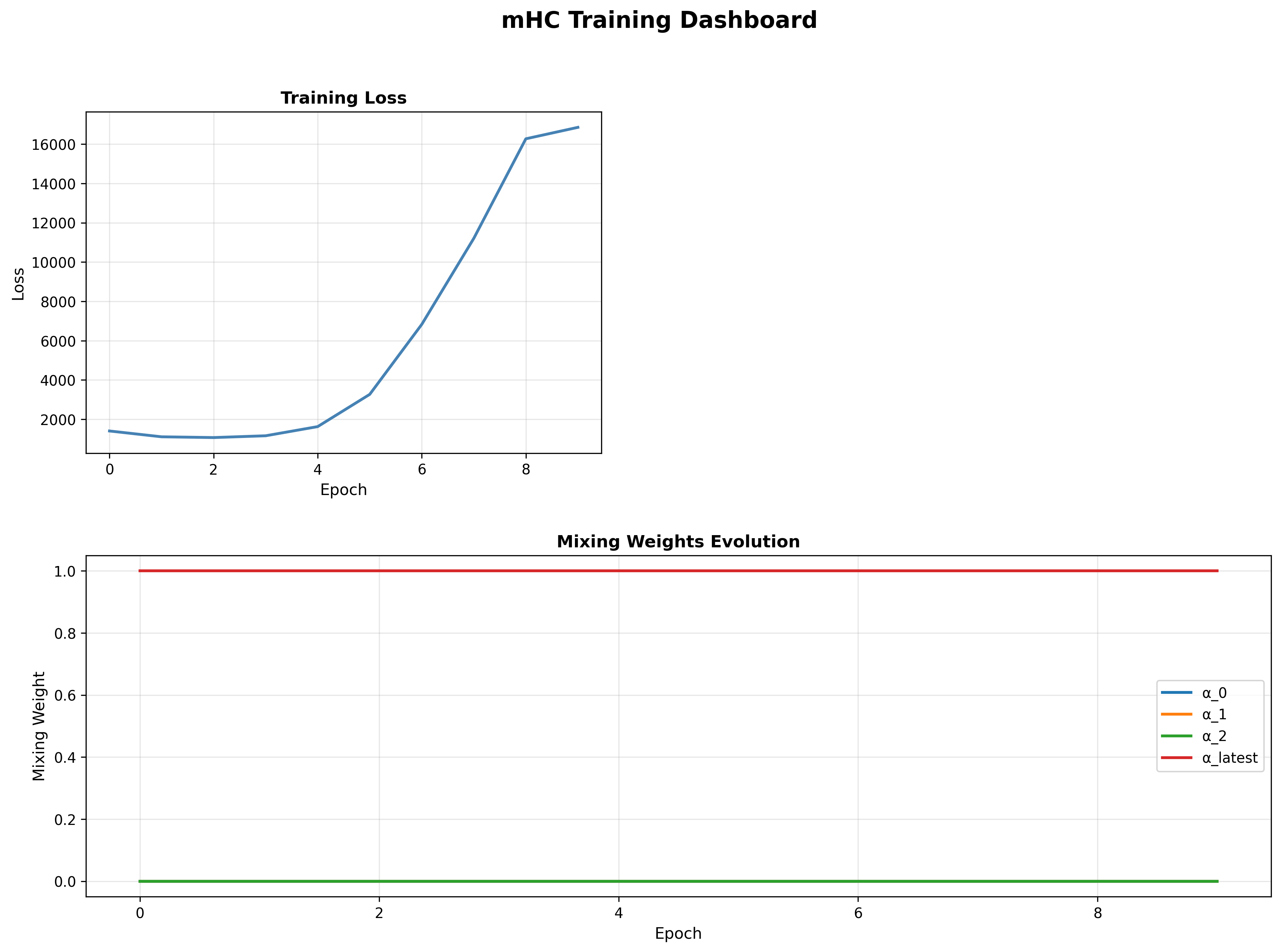
| Training Dashboard | History Evolution |
|---|---|
 |
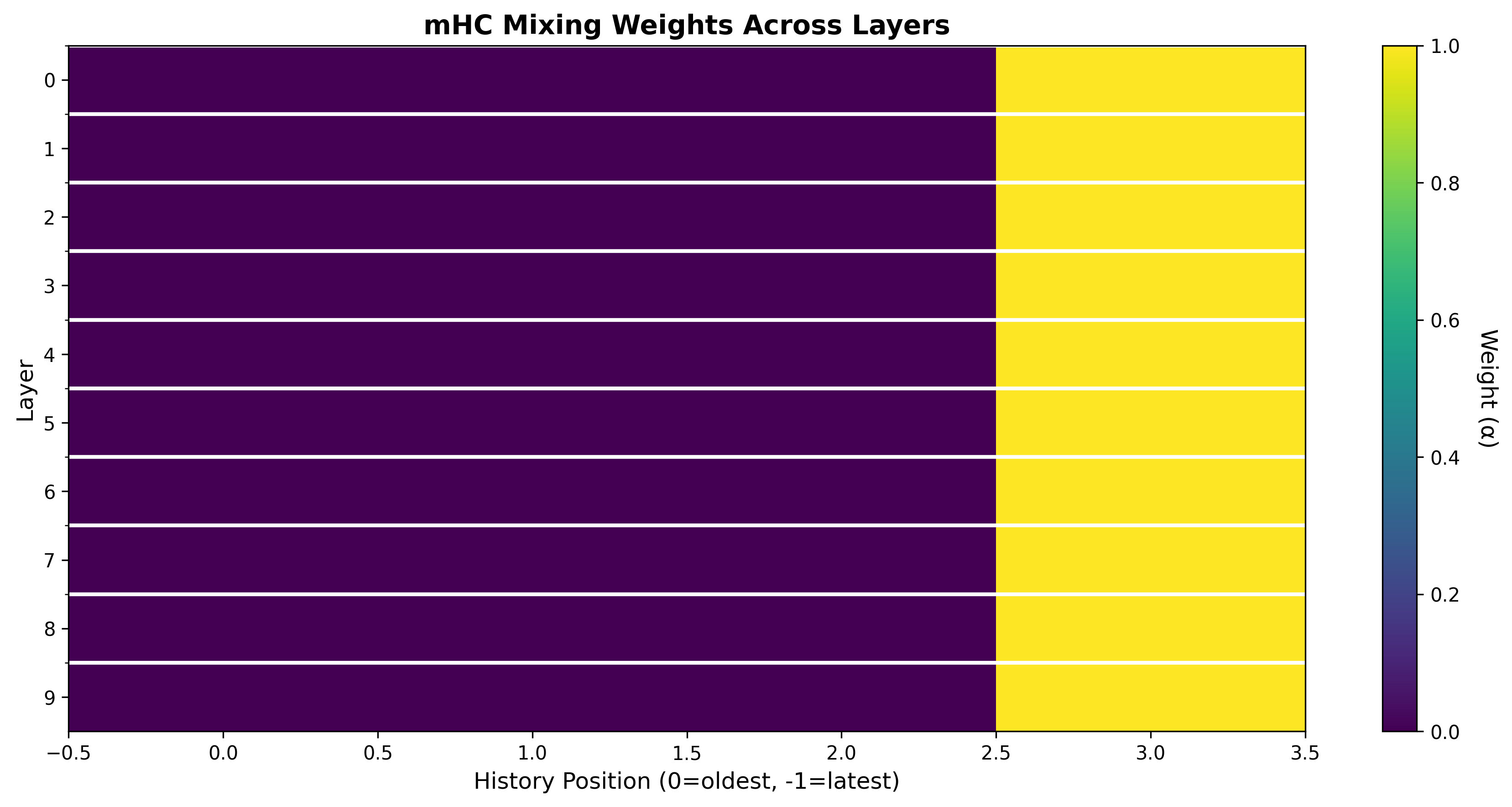 |
| Loss curves & weight dynamics | Learned coefficients over time |
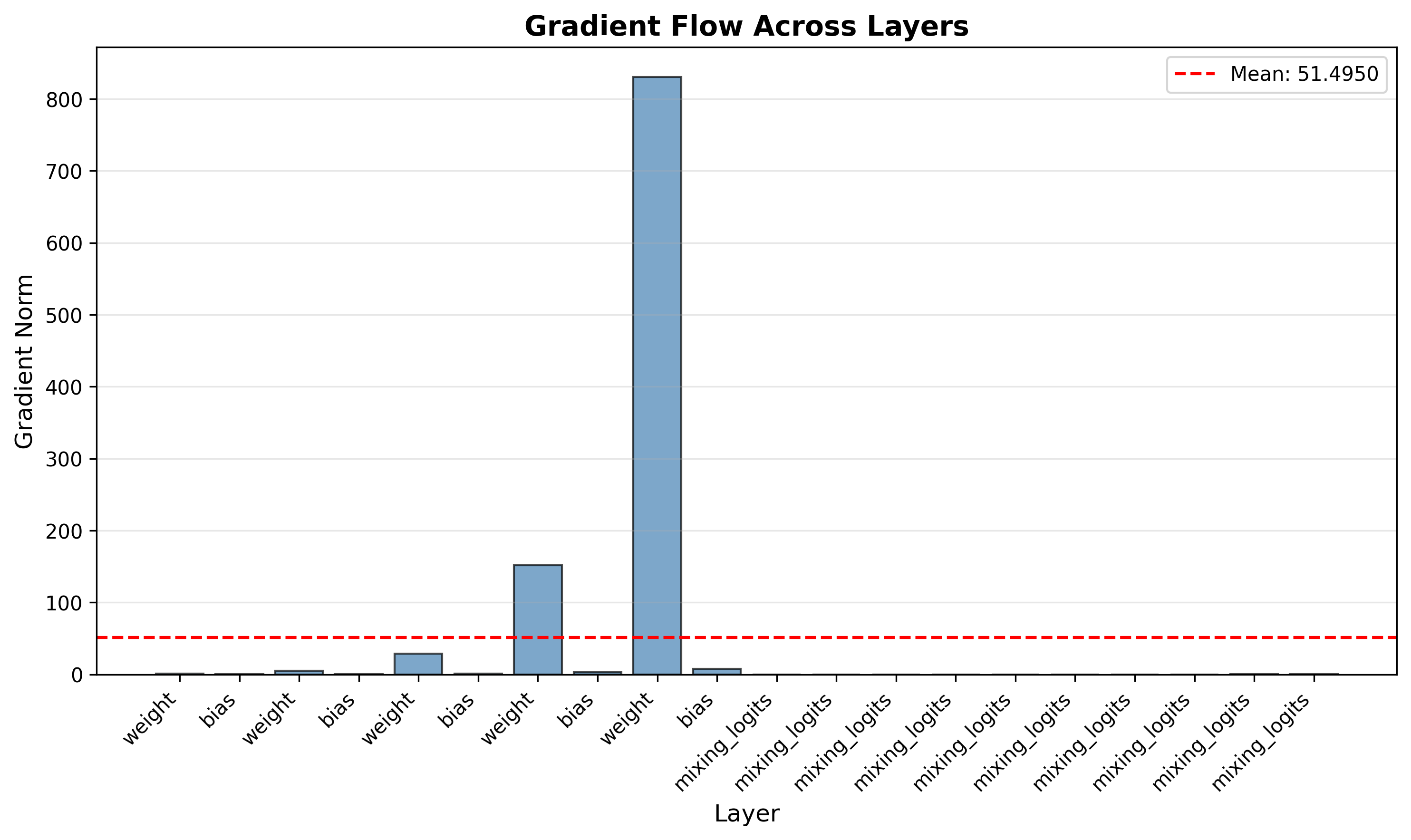
| Gradient Flow | Feature Contribution |
|---|---|
 |
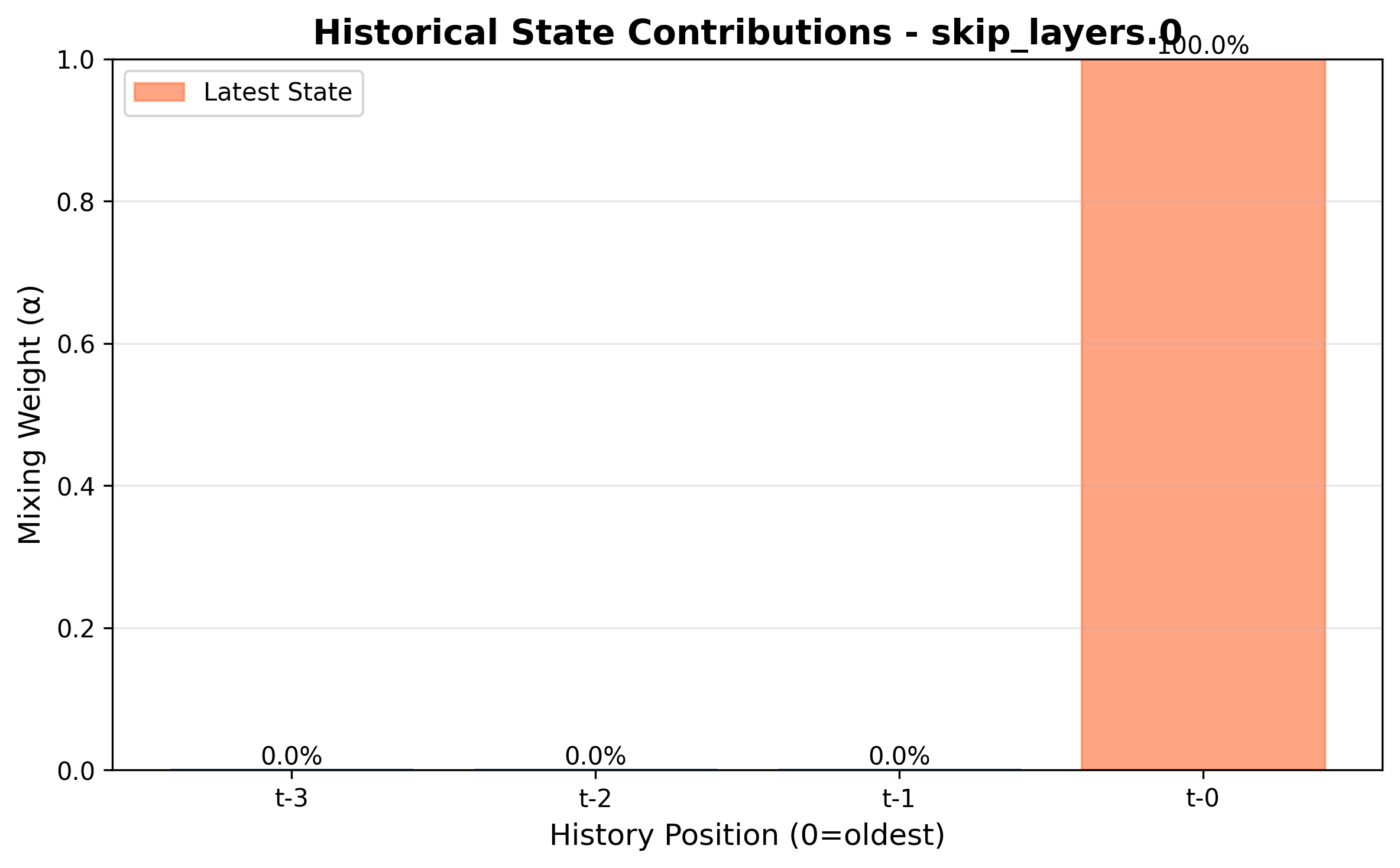 |
| Improved backpropagation signal | Single layer state importance |
MHC/
├── mhc/                     # Core package
│   ├── constraints/         # Mathematical projections
│   ├── layers/              # mHC Skip implementations
│   ├── tf/                  # TensorFlow compatibility
│   └── utils/               # Injection & logging tools
├── tests/                   # Robust PyTest suite
├── docs/                    # Documentation sources
└── examples/                # Quick-start notebooks
For contributors cloning the repository:
git clone https://github.com/gm24med/MHC.git
cd MHC

# Using uv (recommended for dev)
uv pip install -e ".[dev]"

# Or standard pip
pip install -e ".[dev]"