A next-generation AI-powered desktop environment where applications are generated, run, and repaired in real-time by a sovereign agentic system. Powered by Cerebras' ultra-fast inference.
Presentation Recap: https://youtu.be/dthf15gqcQM
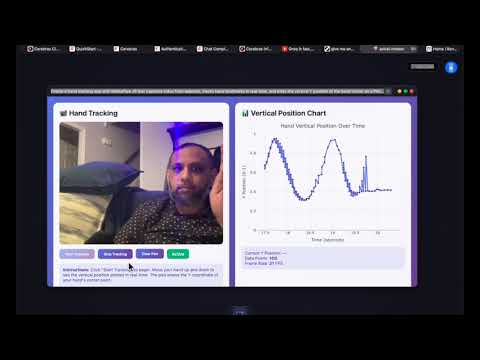
This project represents a shift from static applications to a dynamic, agentic OS. Instead of pre-compiled binaries, the "OS" is a conversation with a high-speed LLM that can:
- Generate Apps: Create full HTML/JS/WebGL applications on the fly.
- Execute Tools: Bridge the gap between the web frontend and the host system using Python tools.
- Self-Repair: Detect errors in both app code and system tools, and autonomously rewrite them to fix the issue.
The system is built on a modern Node.js stack with a unique Agentic State Machine core.
graph TD
    User[User Request] --> Monolith[Mono API Server]
    Monolith --> StateMachine[Agentic State Machine]

    subgraph "Loop 1: Tool Preparation"
        StateMachine --> AIPlanner
        AIPlanner --> ToolManager
        ToolManager -->|Check/Update| PythonTools[Python Tools]
        PythonTools -->|Self-Repair| AIPlanner
    end

    subgraph "Loop 2: App Generation"
        StateMachine --> AppGen[App Generator]
        AppGen --> AppReview[Code Reviewer]
        AppReview --> AppVerify[Requirements Validator]
    end

    AppVerify -->|Success| Frontend[Vite Frontend]
    Frontend -->|Render| Widget[Live Widget]
-
Server (
cerebrasv3/server): A robust Express/TypeScript backend that hosts the State Machine.- Intent Classification: Determines if you want a new app, a tool execution, or a "virtual response" (raw content).
- Tool Manager: Manages a library of Python scripts that grant system access (Filesystem, Hardware, Audio).
- Self-Healing: If a tool fails (e.g., syntax error, missing dependency), the system captures the error, feeds it back to the LLM, and rewrites the Python code automatically.
-
Frontend (
cerebrasv3/client): A Vite/React-based desktop interface.- Window Manager: Draggable, resizable windows for generated apps.
- Live Injection: Receives HTML/JS payloads from the server and injects them into sandboxed containers.
-
Cerebras Engine: The brain of the operation.
- Utilizes
llama3.1-70borqwenmodels via Cerebras API for sub-second inference.
- Utilizes
The system doesn't just call APIs—it writes them. If you ask for "a tool to check my CPU temp", and it doesn't exist:
- The Planner designs the tool.
- The State Machine generates the Python script (
server/tools/cpu_temp.py). - The Tool Manager registers it.
- The App uses it immediately.
A sophisticated 2-loop architecture ensures reliability:
- Tool Prep Loop: Ensures all necessary system access tools exist and are functional before writing any UI code.
- App Gen Loop: Generates the UI, reviews the code for security/syntax issues, and verifies it meets the user's prompt.
For requests that don't need a UI (e.g., "Generate a CSV report of my files"), the system bypasses the App Generator and streams the raw content directly to the client, acting as a virtual file server.
- Node.js v18+
- Python 3.9+ (for tool execution)
- Cerebras API Key
-
Navigate to the project directory:
cd cerebrasv3 -
Install dependencies:
npm install
-
Set up environment:
export CEREBRAS_API_KEY=your_key_here
export DESKTOP_AI_PROVIDER=cerebras
To launch both the backend server and the frontend client:
npm run dev- Frontend: http://localhost:5173
- Backend: http://localhost:4000
cerebrasv3/server/: Backend source code.stateMachine.ts: Core agent logic.aiPlanner.ts: LLM interaction layer.tools/: Directory where Python tools are generated and stored.
cerebrasv3/src/: Frontend React application.