This GitHub repository contains the analysis scripts referring to our publication entitled 'The Big Five personality traits and brain arousal in the resting state' (https://doi.org/10.3390/brainsci11101272). We provide a reproducible and portable R environment, all statistical analysis scripts, and a synthetic dataset to re-run our code.
Based on Eysenck’s biopsychological trait theory, brain arousal has long been considered to explain individual differences in human personality. Yet, results from empirical studies remained inconclusive. However, most published results have been derived from small samples and, despite of inherent limitations, EEG alpha power has usually served as exclusive indicator for brain arousal. To overcome these problems, we here selected N = 468 individuals of the LIFE-Adult cohort and investigated the associations between the Big Five personality traits and brain arousal by using the validated EEG- and EOG-based analysis tool VIGALL. Our analyses revealed that participants who reported higher levels of extraversion and openness to experience, respectively, exhibited lower levels of brain arousal in the resting state. Bayesian and frequentist analysis results were especially convincing for openness to experience. Among the lower-order personality traits, we obtained strongest evidence for neuroticism facet ‘impulsivity’ and reduced brain arousal. In line with this, both impulsivity and openness have previously been conceptualized as aspects of extraversion. We regard our findings as well in line with the postulations of Eysenck and consistent with the recently proposed ‘arousal regulation model’. Our results also agree with meta-analytically derived effect sizes in the field of individual differences research, highlighting the need for large (collaborative) studies.
Keywords: Arousal, Big Five, EEG, Resting State, VIGALL, Extraversion, Neuroticism, Impulsivity
code - contains all analysis scripts as well as the extracted tables, figures and required Matlab functions
eegparadigm - contains the Presentation® files that were used to run the EEG experiment
renv - contains a single file to initiate the R environment (the scripts located in code refer to this file)
synthetic - contains a synthetic dataset that mimics the original observed data
renv.lock - a list of R packages automatically downloaded and attached to the R environment of this project
setwd.sh - a script to automatically set the working directory in all analysis scripts
In order to reproduce our statistical analyses, you should first clone this repository via the the following commands:
git clone https://github.com/pjawinski/bigv.git
cd bigv
You may then update the specified working directory in each analysis script via the following command:
./setwd.sh
You are now ready to run all scripts located in code according to their numbering one after another (starting from '02_bayesian_analyses.R'). R scripts can be run from command line or from within RStudio. The R environment is activated by the scripts and required packages are downloaded automatically. Please note that you need to change the relative path of the original dataset (not publicly available) to the synthetic dataset at respective lines.
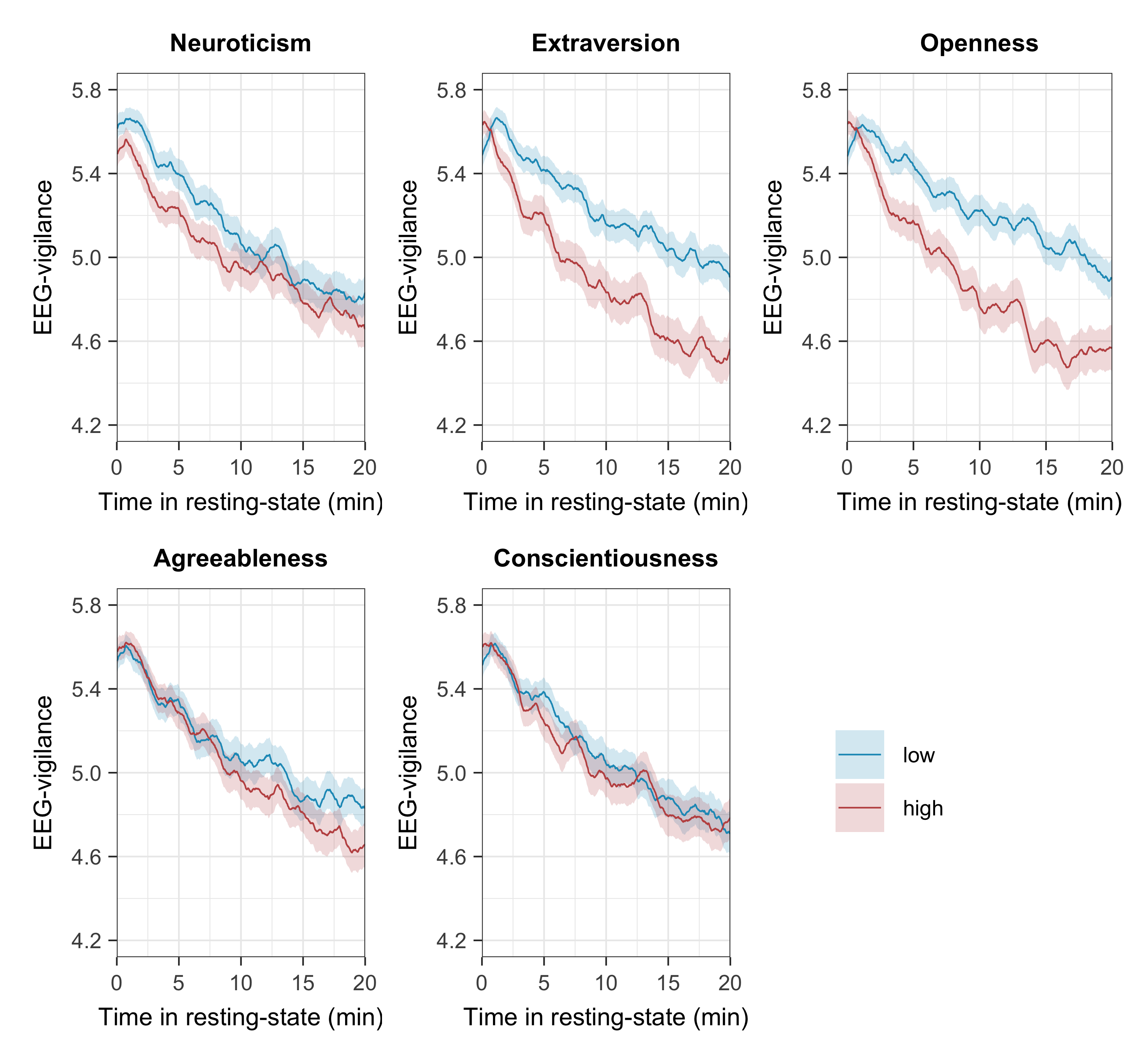
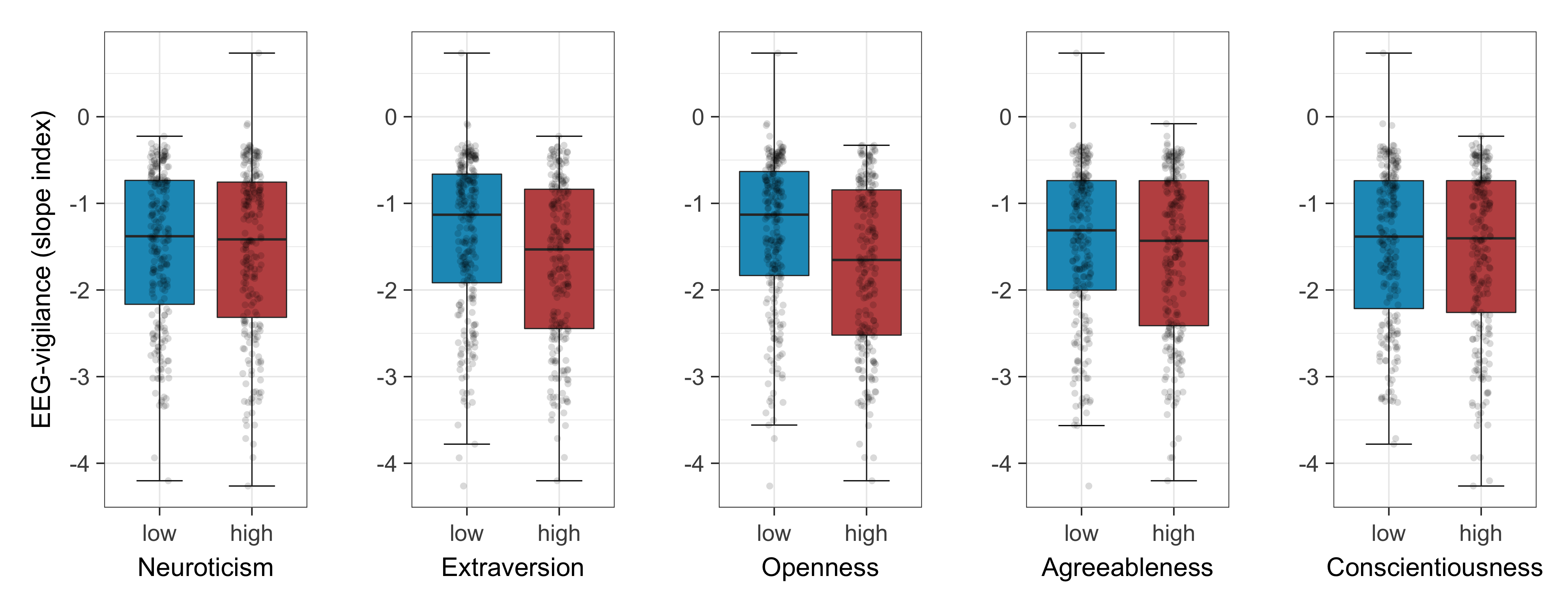
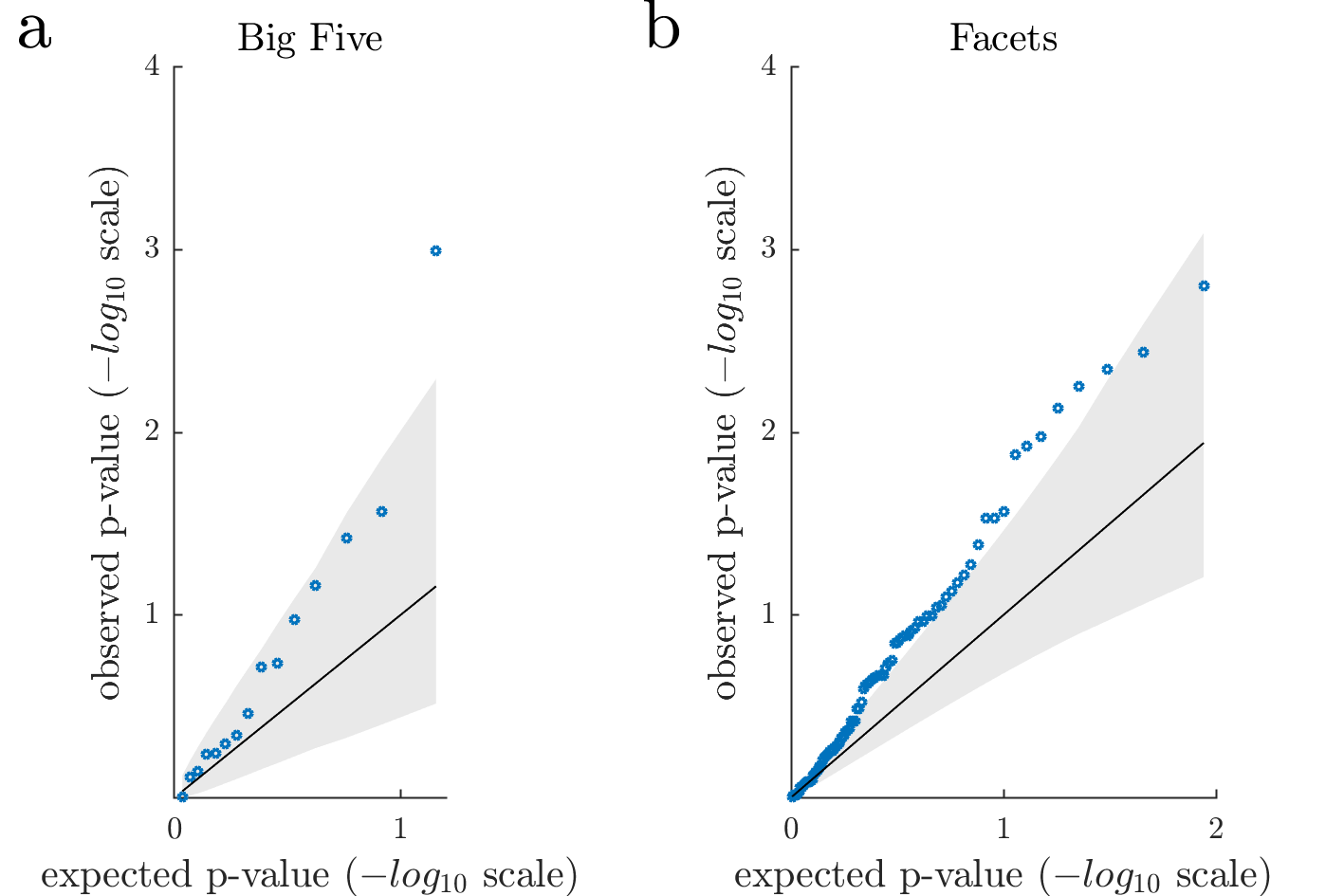
Fig. 3 - Permutation-based qq-plot showing the observed p-values from the association analyses (blue circles) sorted from largest to smallest and plotted against the expected p-values under the null hypothesis. The solid diagonal line represents the mean expected p-values. The lower and upper bound of the grey area represent the 5th and 95th percentile (-log10 scale) of the expected p-values. Quantile-quantile plots show an excess of low p-values, suggesting that association analyses revealed overall stronger evidence than expected under the null hypothesis of no effect. (a) NEO personality traits (sex and age-normalized T-scores) (b) NEO personality facets (sex and age-normalized T-scores).
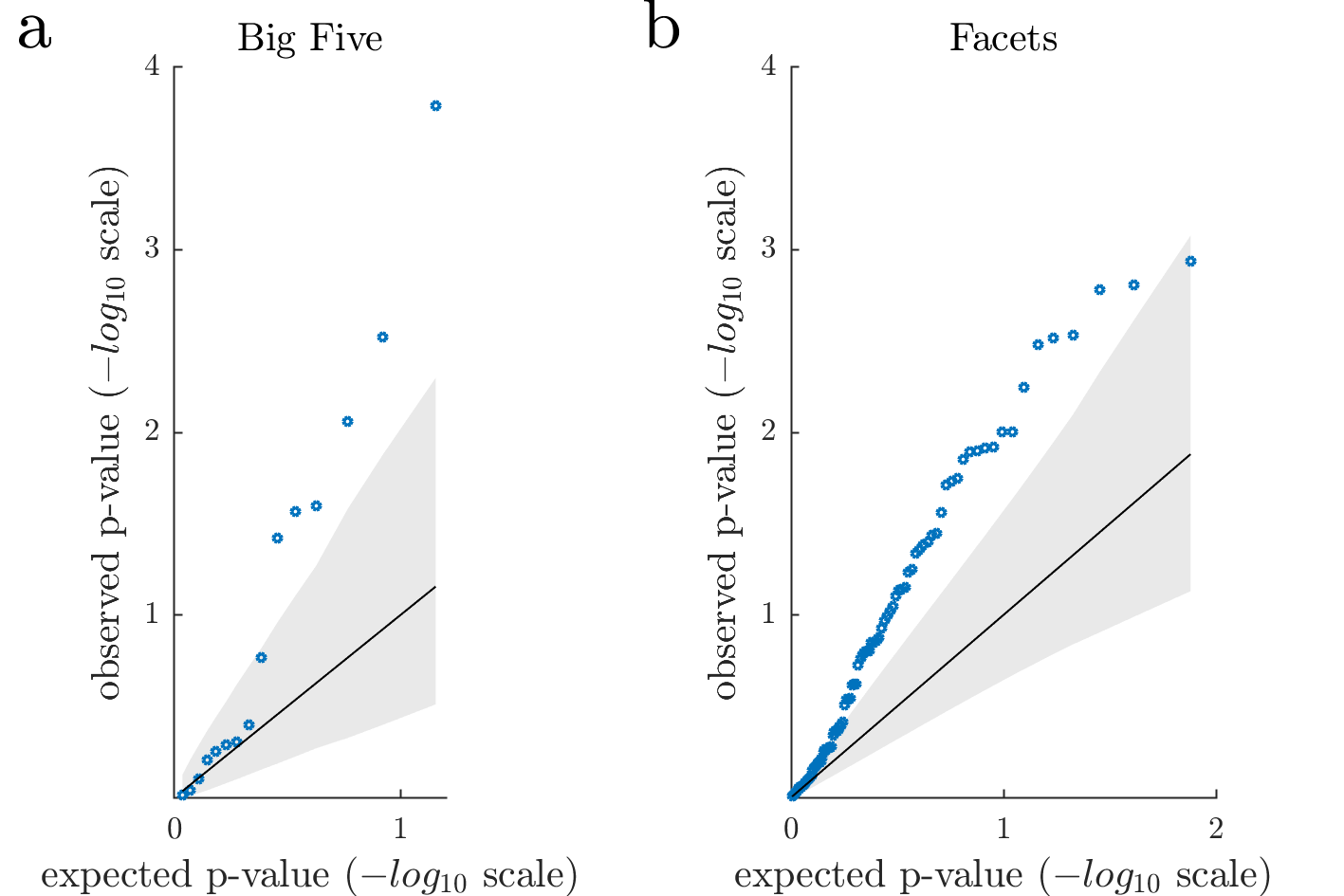
Fig. S3 - Permutation-based qq-plot showing the observed p-values from the association analyses (blue circles) sorted from largest to smallest and plotted against the expected p-values under the null hypothesis. The solid diagonal line represents the mean expected p-values. The lower and upper bound of the grey area represent the 5th and 95th percentile (-log10 scale) of the expected p-values. (a) NEO personality traits (sex and age-normalized T-scores) adjusted by sex, age, and time of EEG assessment. (b) NEO personality facets (sex and age-normalized T-scores) adjusted by sex, age, and time of EEG assessment.