public String longestPalindrome(String a) {
        if(a==null) return a;
        String largest = a.substring(0,1);
        for(int i=0;i<a.length()-1;i++){
            String pallindrome = longestPalindrome(a,i,i);
            if(pallindrome!=null && pallindrome.length()>largest.length()){
                largest = pallindrome;
            }
            pallindrome = longestPalindrome(a,i,i+1);
            if(pallindrome!=null && pallindrome.length()>largest.length()){
                largest = pallindrome;
            }
        }
        return largest;
    }

    String longestPalindrome(String s, int left, int right){
        if(left>right) return null;
        while( left>=0 && right<s.length() && s.charAt(left) == s.charAt(right)){
            left--;
            right++;
        }
        return s.substring(left+1,right);
}
// expand in both directions of low and high to find all palindromes
	public static void expand(String str, int low, int high, Set<String> set)
	{
		// run till str[low.high] is a palindrome
		while (low >= 0 && high < str.length()
				&& str.charAt(low) == str.charAt(high))
		{
			// push all palindromes into the set
			set.add(str.substring(low, high + 1));

			// expand in both directions
			low--;
			high++;
		}
	}

	// Function to find all unique palindromic substrings of given string
	public static void allPalindromicSubStrings(String str)
	{
		// create an empty set to store all unique palindromic substrings
		Set<String> set = new HashSet<>();

		for (int i = 0; i < str.length(); i++)
		{
			// find all odd length palindrome with str[i] as mid point
			expand(str, i, i, set);

			// find all even length palindrome with str[i] and str[i+1]
			// as its mid points
			expand(str, i, i + 1, set);
		}

		// print all unique palindromic substrings
		System.out.print(set);
	}
public int maxSubArray(final List<Integer> a) {
         int sum = Integer.MIN_VALUE;
        int last = 0;

        for (int num : a) {

            last += num;
            sum = Math.max(sum, last);
            if (last < 0)
                last = 0;
        }

        return sum;
}
public class Solution {
    public int maxProduct(int[] A) {
        if (A == null || A.length == 0) {
            return 0;
        }
        int max = A[0], min = A[0], result = A[0];
        for (int i = 1; i < A.length; i++) {
            int temp = max;
            max = Math.max(Math.max(max * A[i], min * A[i]), A[i]);
            min = Math.min(Math.min(temp * A[i], min * A[i]), A[i]);
            if (max > result) {
                result = max;
            }
        }
        return result;
    }
}
public int maxSubArrayLen(int[] nums, int k) {
    HashMap<Integer, Integer> map = new HashMap<Integer, Integer>();

    int max = 0;

    int sum=0;
    for(int i=0; i<nums.length; i++){
        sum += nums[i];

        if(sum==k){
            max = Math.max(max, i+1);
        }

        int diff = sum-k;

        if(map.containsKey(diff)){
            max = Math.max(max, i-map.get(diff));
        }

        if(!map.containsKey(sum)){
            map.put(sum, i);
        }
    }


    return max;
}
public int atoi(String str) {
	if (str == null || str.length() < 1)
		return 0;

	// trim white spaces
	str = str.trim();

	char flag = '+';

	// check negative or positive
	int i = 0;
	if (str.charAt(0) == '-') {
		flag = '-';
		i++;
	} else if (str.charAt(0) == '+') {
		i++;
	}
	// use double to store result
	double result = 0;

	// calculate value
	while (str.length() > i && str.charAt(i) >= '0' && str.charAt(i) <= '9') {
		result = result * 10 + (str.charAt(i) - '0');
		i++;
	}

	if (flag == '-')
		result = -result;

	// handle max and min
	if (result > Integer.MAX_VALUE)
		return Integer.MAX_VALUE;

	if (result < Integer.MIN_VALUE)
		return Integer.MIN_VALUE;

	return (int) result;
}
public class Solution {
    public int lengthOfLongestSubstring(String s) {
    if(s==null||s.length()==0){
        return 0;
    }
    int result = 0;
    int k=0;
    HashSet<Character> set = new HashSet<Character>();
    for(int i=0; i<s.length(); i++){
        char c = s.charAt(i);
        if(!set.contains(c)){
            set.add(c);
            result = Math.max(result, set.size());
        }else{
            while(k<i){
                if(s.charAt(k)==c){
                    k++;
                    break;
                }else{
                    set.remove(s.charAt(k));
                    k++;
                }
            }
        }
    }

    return result;
}
}
public class Solution {
    public int maxArea(int[] height) {
        int maxarea = 0, l = 0, r = height.length - 1;
        while (l < r) {
            maxarea = Math.max(maxarea, Math.min(height[l], height[r]) * (r - l));
            if (height[l] < height[r])
                l++;
            else
                r--;
        }
        return maxarea;
    }
}
 public String longestCommonPrefix(String[] strs) {
    if (strs.length == 0) return "";
    String prefix = strs[0];
    for (int i = 1; i < strs.length; i++)
        while (strs[i].indexOf(prefix) != 0) {
            prefix = prefix.substring(0, prefix.length() - 1);
            if (prefix.isEmpty()) return "";
        }
    return prefix;
}

Time complexity : O(S) , where S is the sum of all characters in all strings.
public String longestCommonPrefix(String[] strs) {
    if (strs == null || strs.length == 0)
        return "";
    int minLen = Integer.MAX_VALUE;
    for (String str : strs)
        minLen = Math.min(minLen, str.length());
    int low = 1;
    int high = minLen;
    while (low <= high) {
        int middle = (low + high) / 2;
        if (isCommonPrefix(strs, middle))
            low = middle + 1;
        else
            high = middle - 1;
    }
    return strs[0].substring(0, (low + high) / 2);
}

private boolean isCommonPrefix(String[] strs, int len){
    String str1 = strs[0].substring(0,len);
    for (int i = 1; i < strs.length; i++)
        if (!strs[i].startsWith(str1))
            return false;
    return true;
}
Time complexity : O(S⋅log(n)), where S is the sum of all characters in all strings.
public List<List<Integer>> threeSum(int[] nums) {
        Arrays.sort(nums);
        HashMap<Integer, Integer> sl = new HashMap<>();
        List<List<Integer>> res = new ArrayList<>();
        for(int i=0;i<nums.length;i++)
            sl.put(nums[i], i);      // overwriting i to hold the latest position of repeating number
        for(int i=0;i<nums.length-2;i++)
        {
            for(int j=i+1;j<nums.length-1;j++)
            {
               int target = 0-nums[i]-nums[j];
                if(sl.containsKey(target) && sl.get(target)>j)
                {
                    j=sl.get(nums[j]);
                    res.add(Arrays.asList(nums[i], nums[j], target));
                }
            }
            i=sl.get(nums[i]);  // To remove duplicates
        }
        return res;
    }
if(s == null || s.length() < 1) {
         return true;
     }

    Stack<Character> stack = new Stack<>();

    for(char c : s.toCharArray()) {
        switch(c) {
            case ')':
                if(stack.isEmpty() || stack.pop() != '(') return false;
                break;
            case ']':
                if(stack.isEmpty() || stack.pop() != '[') return false;
                break;
            case '}':
                if(stack.isEmpty() || stack.pop() != '{') return false;``
                break;

            default:
                stack.push(c);
                break;
        }
    }

  return stack.isEmpty();
public String countAndSay(int n) {
        String s = "1";
        StringBuilder sb = new StringBuilder();
        for(int i = 2; i <= n; i++) {
            for(int j = 0; j < s.length(); j++) {
                char tmp = s.charAt(j);
                int cnt = 1;
                while(j < s.length() - 1 && s.charAt(j+1) == s.charAt(j)) {
                    cnt++;
                    j++;
                }
                sb.append(cnt).append(tmp);
            }
            s = sb.toString();
            sb = new StringBuilder();
        }
        return s;
    }
// Function to create a new Node in heap
BstNode* GetNewNode(int data) {
	BstNode* newNode = new BstNode();
	newNode->data = data;
	newNode->left = newNode->right = NULL;
	return newNode;
}

// To insert data in BST, returns address of root node
BstNode* Insert(BstNode* root,int data) {
	if(root == NULL) { // empty tree
		root = GetNewNode(data);
	}
	// if data to be inserted is lesser, insert in left subtree.
	else if(data <= root->data) {
		root->left = Insert(root->left,data);
	}
	// else, insert in right subtree.
	else {
		root->right = Insert(root->right,data);
	}
	return root;
}
//To search an element in BST, returns true if element is found
bool Search(BstNode* root,int data) {
	if(root == NULL) {
		return false;
	}
	else if(root->data == data) {
		return true;
	}
	else if(data <= root->data) {
		return Search(root->left,data);
	}
	else {
		return Search(root->right,data);
	}
}
int main() {
	BstNode* root = NULL;  // Creating an empty tree
	/*Code to test the logic*/
	root = Insert(root,15);
	root = Insert(root,10);
	root = Insert(root,20);
	root = Insert(root,25);
	root = Insert(root,8);
	root = Insert(root,12);
	// Ask user to enter a number.
	int number;
	cout<<"Enter number be searched\n";
	cin>>number;
	//If number is found, print "FOUND"
	if(Search(root,number) == true) cout<<"Found\n";
	else cout<<"Not Found\n";
}
void LevelOrder(Node *root) {
	if(root == NULL) return;
	queue<Node*> Q;
	Q.push(root);
	//while there is at least one discovered node
	while(!Q.empty()) {
		Node* current = Q.front();
		Q.pop(); // removing the element at front
		cout<<current->data<<" ";
		if(current->left != NULL) Q.push(current->left);
		if(current->right != NULL) Q.push(current->right);
	}
}

//Function to visit nodes in Preorder
void Preorder(struct Node *root) {
	// base condition for recursion
	// if tree/sub-tree is empty, return and exit
	if(root == NULL) return;

	printf("%c ",root->data); // Print data
	Preorder(root->left);     // Visit left subtree
	Preorder(root->right);    // Visit right subtree
}

//Function to visit nodes in Inorder
void Inorder(Node *root) {
	if(root == NULL) return;

	Inorder(root->left);       //Visit left subtree
	printf("%c ",root->data);  //Print data
	Inorder(root->right);      // Visit right subtree
}

//Function to visit nodes in Postorder
void Postorder(Node *root) {
	if(root == NULL) return;

	Postorder(root->left);    // Visit left subtree
	Postorder(root->right);   // Visit right subtree
	printf("%c ",root->data); // Print data
}

http://www.youtube.com/watch?v=qli-JCrSwuk
   int binarySearch(int arr[], int x)
    {
        int l = 0, r = arr.length - 1;
        while (l <= r)
        {
            int m = l + (r-l)/2;

            // Check if x is present at mid
            if (arr[m] == x)
                return m;

            // If x greater, ignore left half
            if (arr[m] < x)
                l = m + 1;

            // If x is smaller, ignore right half
            else
                r = m - 1;
        }

        // if we reach here, then element was
        // not present
        return -1;
    }
FirstOcc(Array a, size n, search_value s){
	low=0;
	high=n-1;
        result=-1
	while(low<=high){
		mid=(low+high)/2;
		if(a[mid]<s)
		  	 low=mid+1;
		else if(a[mid]>s)
			high=mid-1;
		else if(a[mid]==s) {
		 	result=mid; high=mid-1;}
	}
	return result;
}

lastOcc(Array a, size n, search_value s){
	low=0;
	high=n-1;
        result=-1
	while(low<=high){
		mid=(low+high)/2;
		if(a[mid]<s)
		   low=mid+1;
		else if(a[mid]>s)
		    high=mid-1;
		else if(a[mid]==s)
		 { result=mid; low=mid+1;}
	}
     return ressult;
}
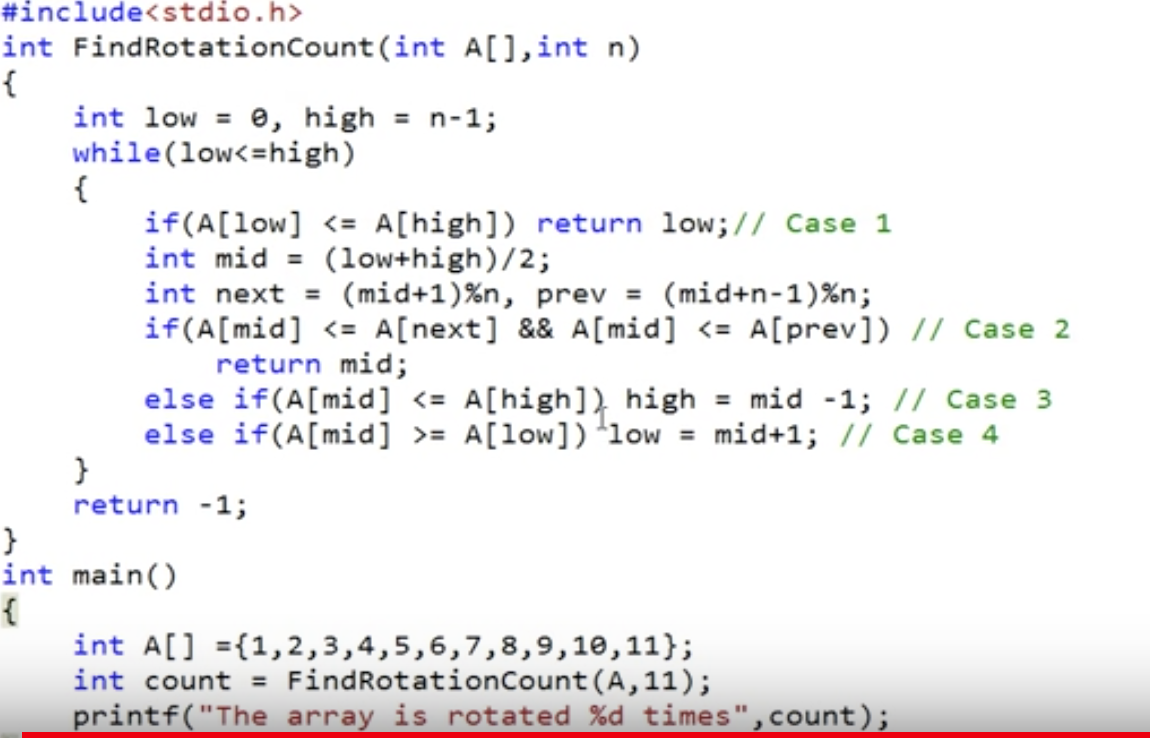

/ Returns the maximum value that can be put in a knapsack of capacity W
    static int knapSack(int W, int wt[], int val[], int n)
    {
         int i, w;
     int K[][] = new int[n+1][W+1];

     // Build table K[][] in bottom up manner
     for (i = 0; i <= n; i++)
     {
         for (w = 0; w <= W; w++)
         {
             if (i==0 || w==0)
                  K[i][w] = 0;
             else if (wt[i-1] <= w)
                   K[i][w] = max(val[i-1] + K[i-1][w-wt[i-1]],  K[i-1][w]);
             else
                   K[i][w] = K[i-1][w];
         }
      }

      return K[n][W];
    }


    //Recursion and dep
    int rec(int idx, int weight) {
	if(weight >= W){
		return 0;
	}
	if(idx > N){
		return 0;
	}
	if(dp[idx][weight]!=-1)return dp[idx][weight]
	int ans = 0;

	ans = max(ans, rec(idx+1, weight));
	if(weight+w[idx] <= W){
		ans = max(ans, value[idx] + rec(idx+1, weight+w[idx]));
	}

	return dp[idx][weight] = ans;
}
String arr = "abc";
char temp;
char[] arr = inpStr.toCharArray();
int len = arr.length;
for(int i=0;i<len/2;i++,len--){
  temp = arr[i];
  arr[i]=arr[len-1];
  arr[len-1] = temp;
}
public void reverse(int[] nums, int start, int end) {
        while (start < end) {
            int temp = nums[start];
            nums[start] = nums[end];
            nums[end] = temp;
            start++;
            end--;
        }
    }
boolean isPalindrome(String s) {
  int n = s.length();
  for (int i = 0; i < (n/2); ++i) {
     if (s.charAt(i) != s.charAt(n - i - 1)) {
         return false;
     }
  }

  return true;
}
void Insert(int data, int n)
{
    int i;
    struct Node* temp1  = (struct Node*) malloc(sizeof(struct Node));
    temp1->data = data;
    temp1->next = NULL;
    if(n == 1)
    {
        temp1->next = head;
        head = temp1;
        return;
    }
    struct Node* temp2 = head;
    for(i=0;i<n-2;i++)
    {
        temp2 = temp2->next;
    }

    temp1->next = temp2->next;
    temp2->next = temp1;
}
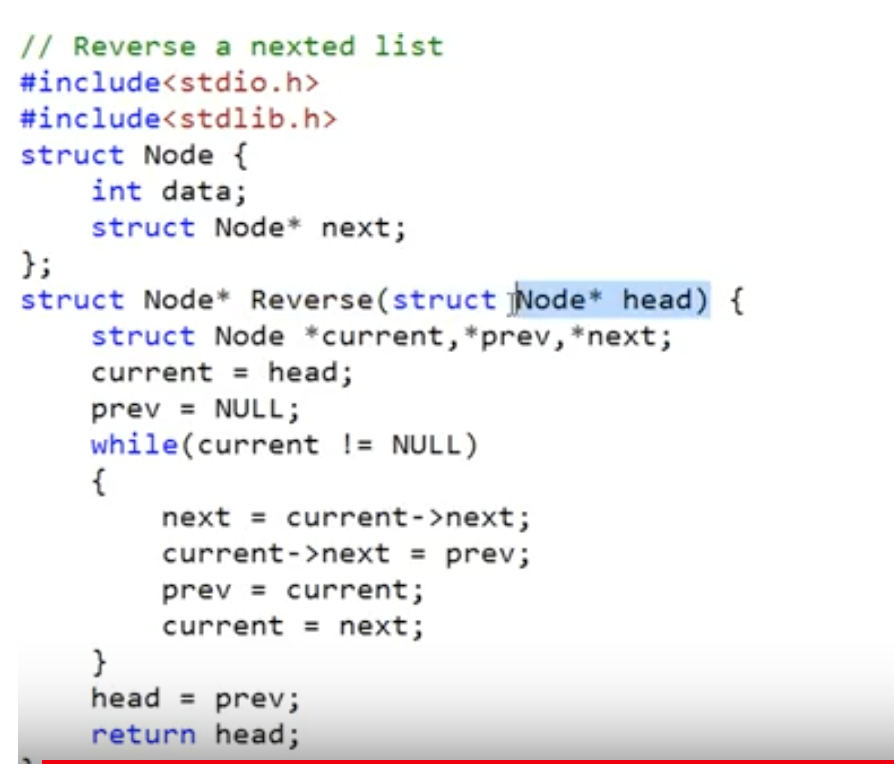
https://youtu.be/zKwwjAkaXLI?t=804
public static int dynamic(int[] v, int amount) {
		int[][] solution = new int[v.length + 1][amount + 1];

		// if amount=0 then just return empty set to make the change
		for (int i = 0; i <= v.length; i++) {
			solution[i][0] = 1;
		}

		// if no coins given, 0 ways to change the amount
		for (int i = 1; i <= amount; i++) {
			solution[0][i] = 0;
		}

		// now fill rest of the matrix.

		for (int i = 1; i <= v.length; i++) {
			for (int j = 1; j <= amount; j++) {
				// check if the coin value is less than the amount needed
				if (v[i - 1] <= j) {
					// reduce the amount by coin value and
					// use the subproblem solution (amount-v[i]) and
					// add the solution from the top to it
					solution[i][j] = solution[i - 1][j]
							+ solution[i][j - v[i - 1]];
				} else {
					// just copy the value from the top
					solution[i][j] = solution[i - 1][j];
				}
			}
		}
		return solution[v.length][amount];
	}

	public static void main(String[] args) {
		int amount = 5;
		int[] v = { 1, 2, 3 };
		System.out.println("By Dynamic Programming " + dynamic(v, amount));
	}

	//Recursion
	int rec(int idx, int sum) {
	if(sum > SUM){
		return 0;
	}
	if(sum == SUM){
		return 1;
	}
	if(idx > N){
		return 0;
	}

	if(dp[idx][sum]!=-1)return dp[idx][sum];

	int ans = 0;

	ans = rec(idx+1,sum);
	ans = rec(idx, sum + S[idx]) + ans;

	return dp[idx][sum] = ans;

}

}
Postfix
// Function to evaluate Postfix expression and return output
int EvaluatePostfix(string expression)
{
	// Declaring a Stack from Standard template library in C++.
	stack<int> S;

	for(int i = 0;i< expression.length();i++) {

		// Scanning each character from left.
		// If character is a delimitter, move on.
		if(expression[i] == ' ' || expression[i] == ',') continue;

		// If character is operator, pop two elements from stack, perform operation and push the result back.
		else if(IsOperator(expression[i])) {
			// Pop two operands.
			int operand2 = S.top(); S.pop();
			int operand1 = S.top(); S.pop();
			// Perform operation
			int result = PerformOperation(expression[i], operand1, operand2);
			//Push back result of operation on stack.
			S.push(result);
		}
		else if(IsNumericDigit(expression[i])){
			// Extract the numeric operand from the string
			// Keep incrementing i as long as you are getting a numeric digit.
			int operand = 0;
			while(i<expression.length() && IsNumericDigit(expression[i])) {
				// For a number with more than one digits, as we are scanning from left to right.
				// Everytime , we get a digit towards right, we can multiply current total in operand by 10
				// and add the new digit.
				operand = (operand*10) + (expression[i] - '0');
				i++;
			}
			// Finally, you will come out of while loop with i set to a non-numeric character or end of string
			// decrement i because it will be incremented in increment section of loop once again.
			// We do not want to skip the non-numeric character by incrementing i twice.
			i--;

			// Push operand on stack.
			S.push(operand);
		}
	}
	// If expression is in correct format, Stack will finally have one element. This will be the output.
	return S.top();
}
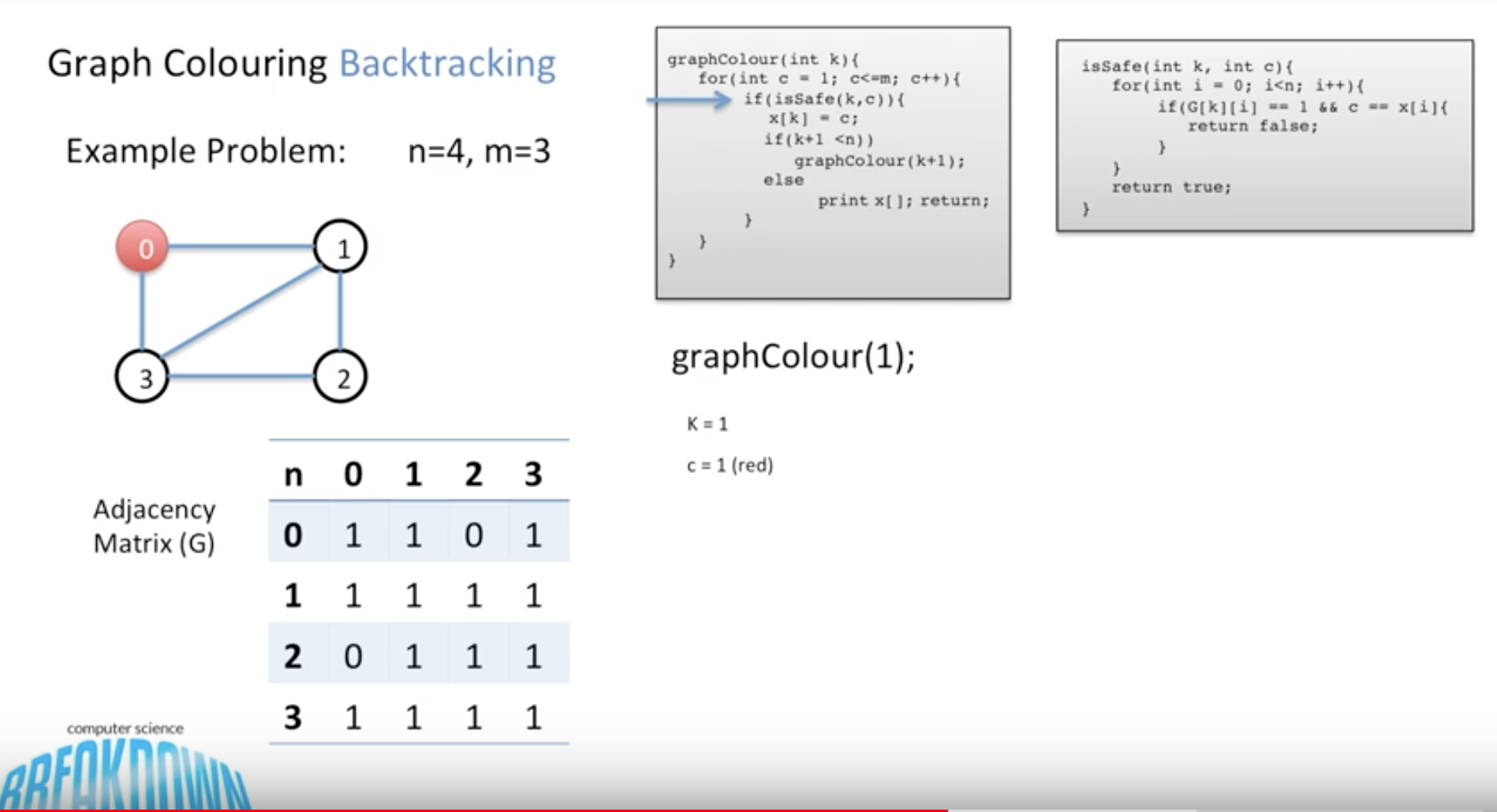
int paintFence(int n, int k){
if(n==0) return 0;
if(n==1) return k;
int[] dp = new int[n];
dp[1] = k;
int same = 0;
int diff = k;
for(int i=2;i<=n;i++){
  same = diff;
  diff = dp[i-1]*(k-1) //
  dp[i] = same +diff;
}
return dp[n];
}
public class Solution {
    public void rotate(int[] nums, int k) {
        k %= nums.length;
        reverse(nums, 0, nums.length - 1);
        reverse(nums, 0, k - 1);
        reverse(nums, k, nums.length - 1);
    }
    public void reverse(int[] nums, int start, int end) {
        while (start < end) {
            int temp = nums[start];
            nums[start] = nums[end];
            nums[end] = temp;
            start++;
            end--;
        }
    }
}
rotate(arr[], d, n)
  reverse(arr[], 1, d) ;
  reverse(arr[], d + 1, n);
  reverse(arr[], 1, n);
 public static int localMinUtil(int[] arr, int low,
                                   int high, int n)
    {

        // Find index of middle element
        int mid = low + (high - low) / 2;

         // Compare middle element with its neighbours
        // (if neighbours exist)
        if(mid == 0 || arr[mid - 1] > arr[mid] && mid == n - 1 ||
           arr[mid] < arr[mid + 1])
                return mid;

        // If middle element is not minima and its left
        // neighbour is smaller than it, then left half
        // must have a local minima.
        else if(mid > 0 && arr[mid - 1] < arr[mid])
                return localMinUtil(arr, low, mid - 1, n);

        // If middle element is not minima and its right
        // neighbour is smaller than it, then right half
        // must have a local minima.
        return localMinUtil(arr, mid + 1, high, n);
    }
// Program to find minimum number of platforms

import java.util.*;

class GFG {

// Returns minimum number of platforms reqquired
static int findPlatform(int arr[], int dep[], int n)
{
   // Sort arrival and departure arrays
   Arrays.sort(arr);
   Arrays.sort(dep);

   // plat_needed indicates number of platforms
   // needed at a time
   int plat_needed = 1, result = 1;
   int i = 1, j = 0;

   // Similar to merge in merge sort to process
   // all events in sorted order
   while (i < n && j < n)
   {
      // If next event in sorted order is arrival,
      // increment count of platforms needed
      if (arr[i] <= dep[j])
      {
          plat_needed++;
          i++;

          // Update result if needed
          if (plat_needed > result)
              result = plat_needed;
      }

      // Else decrement count of platforms needed
      else
      {
          plat_needed--;
          j++;
      }
   }

   return result;
}
https://www.geeksforgeeks.org/?p=2392/
public List<String> topKFrequent(String[] words, int k) {
        List<String> ans = new ArrayList<>();
        if(words == null || words.length == 0) {
            return ans;
        }
        Map<String, Integer> map = new HashMap<>();
        for(String word : words) {
            map.put(word,map.getOrDefault(word, 0) + 1);
        }
        PriorityQueue<String> pq = new PriorityQueue<>
            ((a,b) -> map.get(b) ==  map.get(a)? b.compareTo(a) : map.get(a) - map.get(b));
        for (String word: map.keySet()) {
            pq.offer(word);
            if (pq.size() > k) pq.poll();
        }
        while (!pq.isEmpty()) ans.add(0,pq.poll());
        return ans;
    }

    O(nlogk)
Node lca(Node node, int n1, int n2)
    {
        if (node == null)
            return null;

        // If both n1 and n2 are smaller than root, then LCA lies in left
        if (node.data > n1 && node.data > n2)
            return lca(node.left, n1, n2);

        // If both n1 and n2 are greater than root, then LCA lies in right
        if (node.data < n1 && node.data < n2)
            return lca(node.right, n1, n2);

        return node;
    }
Node findLCA(Node node, int n1, int n2)
    {
        // Base case
        if (node == null)
            return null;

        // If either n1 or n2 matches with root's key, report
        // the presence by returning root (Note that if a key is
        // ancestor of other, then the ancestor key becomes LCA
        if (node.data == n1 || node.data == n2)
            return node;

        // Look for keys in left and right subtrees
        Node left_lca = findLCA(node.left, n1, n2);
        Node right_lca = findLCA(node.right, n1, n2);

        // If both of the above calls return Non-NULL, then one key
        // is present in once subtree and other is present in other,
        // So this node is the LCA
        if (left_lca!=null && right_lca!=null)
            return node;

        // Otherwise check if left subtree or right subtree is LCA
        return (left_lca != null) ? left_lca : right_lca;
    }
Node lca = findLCA(root,n1,n2);
int l1 = getLevel(lca,n1,0);
int l2 = getLevel(lca,n2,0);
return l1+l2;
int height(Node root)
    {
        if (root == null)
           return 0;
        else
        {
            /* compute  height of each subtree */
            int lheight = height(root.left);
            int rheight = height(root.right);

            /* use the larger one */
            if (lheight > rheight)
                return(lheight+1);
            else return(rheight+1);
        }
    }
 /* Helper function for getLevel().  It returns level of the data
    if data is present in tree, otherwise returns 0.*/
    int getLevelUtil(Node node, int data, int level)
    {
        if (node == null)
            return 0;

        if (node.data == data)
            return level;

        int downlevel = getLevelUtil(node.left, data, level + 1);
        if (downlevel != 0)
            return downlevel;

        downlevel = getLevelUtil(node.right, data, level + 1);
        return downlevel;
    }

    /* Returns level of given data value */
    int getLevel(Node node, int data)
    {
        return getLevelUtil(node, data, 1);
    }
mirror(Node root){
 if(root!=null){
   mirror(root.left);
   mirror(root.right);
   Node temp = root.left;
   root.left = root.right;
   root.right= temp;

 }else{
 return
 }
}
https://blog.kamranali.in/system-design/url-shortner
public int minCost(int[][] costs) {
    if(costs==null||costs.length==0)
        return 0;

    for(int i=1; i<costs.length; i++){
        costs[i][0] += Math.min(costs[i-1][1], costs[i-1][2]);
        costs[i][1] += Math.min(costs[i-1][0], costs[i-1][2]);
        costs[i][2] += Math.min(costs[i-1][0], costs[i-1][1]);
    }

    int m = costs.length-1;
    return Math.min(Math.min(costs[m][0], costs[m][1]), costs[m][2]);
}
public class Trie {

    private class TrieNode {
        Map<Character, TrieNode> children;
        boolean endOfWord;
        public TrieNode() {
            children = new HashMap<>();
            endOfWord = false;
        }
    }

    private final TrieNode root;
    public Trie() {
        root = new TrieNode();
    }

    /**
     * Iterative implementation of insert into trie
     */
    public void insert(String word) {
        TrieNode current = root;
        for (int i = 0; i < word.length(); i++) {
            char ch = word.charAt(i);
            TrieNode node = current.children.get(ch);
            if (node == null) {
                node = new TrieNode();
                current.children.put(ch, node);
            }
            current = node;
        }
        //mark the current nodes endOfWord as true
        current.endOfWord = true;
    }

    /**
     * Recursive implementation of insert into trie
     */
    public void insertRecursive(String word) {
        insertRecursive(root, word, 0);
    }


    private void insertRecursive(TrieNode current, String word, int index) {
        if (index == word.length()) {
            //if end of word is reached then mark endOfWord as true on current node
            current.endOfWord = true;
            return;
        }
        char ch = word.charAt(index);
        TrieNode node = current.children.get(ch);

        //if node does not exists in map then create one and put it into map
        if (node == null) {
            node = new TrieNode();
            current.children.put(ch, node);
        }
        insertRecursive(node, word, index + 1);
    }

    /**
     * Iterative implementation of search into trie.
     */
    public boolean search(String word) {
        TrieNode current = root;
        for (int i = 0; i < word.length(); i++) {
            char ch = word.charAt(i);
            TrieNode node = current.children.get(ch);
            //if node does not exist for given char then return false
            if (node == null) {
                return false;
            }
            current = node;
        }
        //return true of current's endOfWord is true else return false.
        return current.endOfWord;
    }

    /**
     * Recursive implementation of search into trie.
     */
    public boolean searchRecursive(String word) {
        return searchRecursive(root, word, 0);
    }
    private boolean searchRecursive(TrieNode current, String word, int index) {
        if (index == word.length()) {
            //return true of current's endOfWord is true else return false.
            return current.endOfWord;
        }
        char ch = word.charAt(index);
        TrieNode node = current.children.get(ch);
        //if node does not exist for given char then return false
        if (node == null) {
            return false;
        }
        return searchRecursive(node, word, index + 1);
    }

    /**
     * Delete word from trie.
     */
    public void delete(String word) {
        delete(root, word, 0);
    }

    /**
     * Returns true if parent should delete the mapping
     */
    private boolean delete(TrieNode current, String word, int index) {
        if (index == word.length()) {
            //when end of word is reached only delete if currrent.endOfWord is true.
            if (!current.endOfWord) {
                return false;
            }
            current.endOfWord = false;
            //if current has no other mapping then return true
            return current.children.size() == 0;
        }
        char ch = word.charAt(index);
        TrieNode node = current.children.get(ch);
        if (node == null) {
            return false;
        }
        boolean shouldDeleteCurrentNode = delete(node, word, index + 1);

        //if true is returned then delete the mapping of character and trienode reference from map.
        if (shouldDeleteCurrentNode) {
            current.children.remove(ch);
            //return true if no mappings are left in the map.
            return current.children.size() == 0;
        }
        return false;
    }
}
int power(int x, unsigned int y)
{
    int temp;
    if( y == 0)
        return 1;
    temp = power(x, y/2);
    if (y%2 == 0)
        return temp*temp;
    else
        return x*temp*temp;
}
static float power(float x, int y)
    {
        float temp;
        if( y == 0)
            return 1;
        temp = power(x, y/2);

        if (y%2 == 0)
            return temp*temp;
        else
        {
            if(y > 0)
                return x * temp * temp;
            else
                return (temp * temp) / x;
        }
    }
private LinkedList<Integer> q1 = new LinkedList<>();

// Push element x onto stack.
public void push(int x) {
    q1.add(x);
    int sz = q1.size();
    while (sz > 1) {
        q1.add(q1.remove());
        sz--;
    }
}
Using two queues
public void pop() {
    while (q1.size() > 1) {
        top = q1.remove();
        q2.add(top);
    }
    q1.remove();
    Queue<Integer> temp = q1;
    q1 = q2;
    q2 = temp;
}
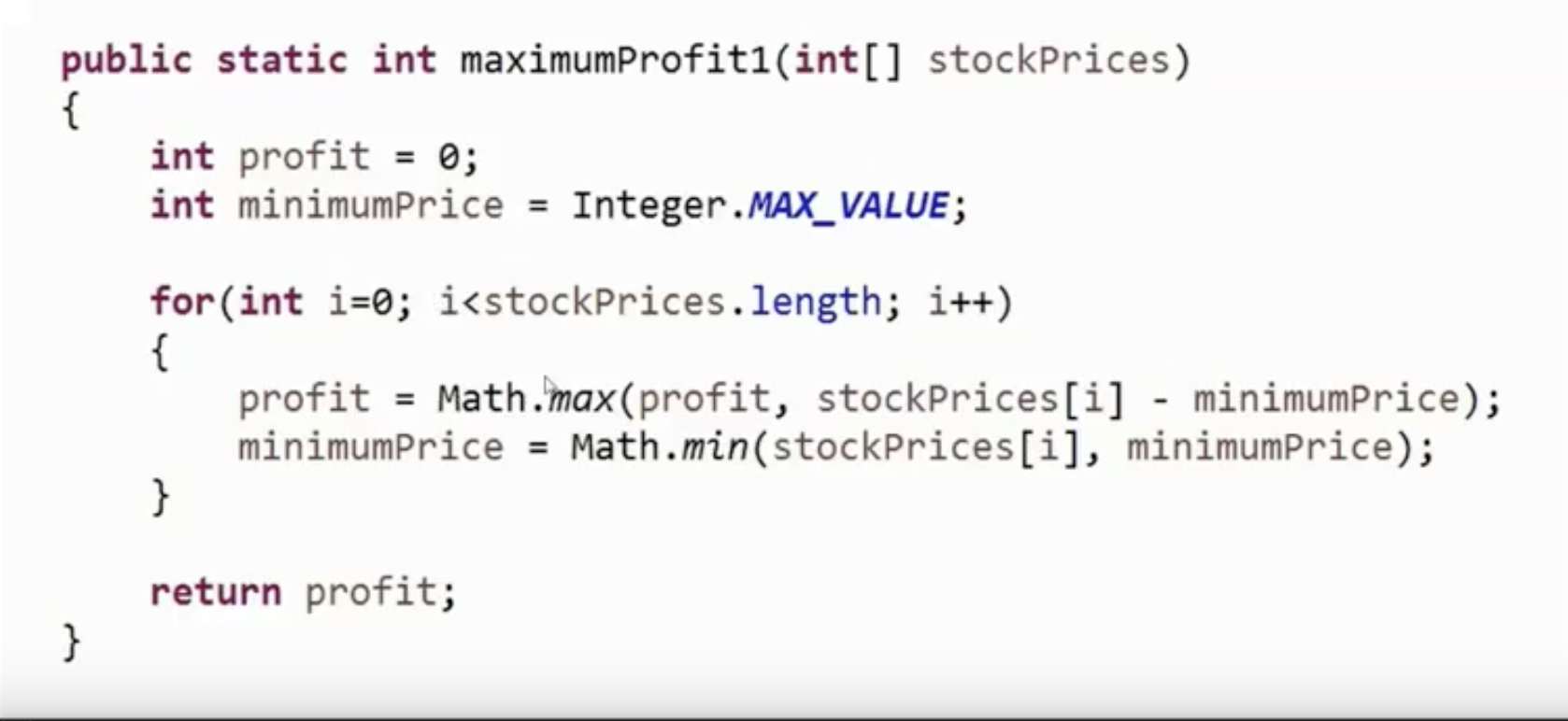
static class QueueEntry {
		int vertex; // Vertex number
		int distance; // distance of this vertex from source
	};

	static int MinimumDiceThrows(int board[], int N) {

		boolean[] visited = new boolean[N];

		for (int i = 0; i < N; i++) {
			visited[i] = false;
		}

		Queue<QueueEntry> q = new LinkedList<QueueEntry>();

		visited[0] = true;
		QueueEntry s = new QueueEntry();
		s.distance = 0;
		s.vertex = 0;
		q.add(s);

		QueueEntry qe = new QueueEntry();

		while (!q.isEmpty()) {

			qe = q.peek();
			int vertex = qe.vertex;

			if (vertex == N - 1){
				break;
			}

			q.remove();
			for (int i = vertex + 1; i <= (vertex + 6) && i < N; ++i) {

				if (visited[i] == false) {

					QueueEntry cell = new QueueEntry();
					cell.distance = (qe.distance + 1);
					visited[i] = true;
					if (board[i] != -1){

						cell.vertex = board[i];

					}else{

						cell.vertex = i;

					}
					q.add(cell);

				}
			}
		}

		return qe.distance;
	}
boolean isPalindrome(Node head)
    {
        slow_ptr = head; fast_ptr = head;
        Node prev_of_slow_ptr = head;
        Node midnode = null;  // To handle odd size list
        boolean res = true; // initialize result

        if (head != null && head.next != null)
        {
            /* Get the middle of the list. Move slow_ptr by 1
               and fast_ptrr by 2, slow_ptr will have the middle
               node */
            while (fast_ptr != null && fast_ptr.next != null)
            {
                fast_ptr = fast_ptr.next.next;

                /*We need previous of the slow_ptr for
                  linked lists  with odd elements */
                prev_of_slow_ptr = slow_ptr;
                slow_ptr = slow_ptr.next;
            }

            /* fast_ptr would become NULL when there are even elements
               in the list and not NULL for odd elements. We need to skip
               the middle node for odd case and store it somewhere so that
               we can restore the original list */
            if (fast_ptr != null)
            {
                midnode = slow_ptr;
                slow_ptr = slow_ptr.next;
            }

            // Now reverse the second half and compare it with first half
            second_half = slow_ptr;
            prev_of_slow_ptr.next = null; // NULL terminate first half
            reverse();  // Reverse the second half
            res = compareLists(head, second_half); // compare

            /* Construct the original list back */
            reverse(); // Reverse the second half again

            if (midnode != null)
            {
                // If there was a mid node (odd size case) which
                // was not part of either first half or second half.
                prev_of_slow_ptr.next = midnode;
                midnode.next = second_half;
            } else
                prev_of_slow_ptr.next = second_half;
        }
        return res;
    }

    /* Function to reverse the linked list  Note that this
       function may change the head */
    void reverse()
    {
        Node prev = null;
        Node current = second_half;
        Node next;
        while (current != null)
        {
            next = current.next;
            current.next = prev;
            prev = current;
            current = next;
        }
        second_half = prev;
    }

    /* Function to check if two input lists have same data*/
    boolean compareLists(Node head1, Node head2)
    {
        Node temp1 = head1;
        Node temp2 = head2;

        while (temp1 != null && temp2 != null)
        {
            if (temp1.data == temp2.data)
            {
                temp1 = temp1.next;
                temp2 = temp2.next;
            } else
                return false;
        }

        /* Both are empty reurn 1*/
        if (temp1 == null && temp2 == null)
            return true;

        /* Will reach here when one is NULL
           and other is not */
        return false;
    }
// function to print right view of binary tree
    private static void printRightView(Node root)
    {
        if (root == null)
            return;

        Queue<Node> queue = new LinkedList<Node>();
        queue.add(root);

        while (!queue.isEmpty())
        {
            // number of nodes at current level
            int n = queue.size();

            // Traverse all nodes of current level
            for (int i = 1; i <= n; i++) {
                Node temp = queue.poll();

                // Print the left most element at
                // the level
                if (i == n)
                    System.out.print(temp.data + " ");

                // Add left node to queue
                if (temp.left != null)
                    queue.add(temp.left);

                // Add right node to queue
                if (temp.right != null)
                    queue.add(temp.right);
            }
        }
    }

    private static void printLeftView(Node root)
    {
        if (root == null)
            return;

        Queue<Node> queue = new LinkedList<Node>();
        queue.add(root);

        while (!queue.isEmpty())
        {
            // number of nodes at current level
            int n = queue.size();

            // Traverse all nodes of current level
            for (int i = 1; i <= n; i++) {
                Node temp = queue.poll();

                // Print the left most element at
                // the level
                if (i == 1)
                    System.out.print(temp.data + " ");

                // Add left node to queue
                if (temp.left != null)
                    queue.add(temp.left);

                // Add right node to queue
                if (temp.right != null)
                    queue.add(temp.right);
            }
        }
    }
private void TopView(Node root) {
        class QueueObj {
            Node node;
            int hd;

            QueueObj(Node node, int hd) {
                this.node = node;
                this.hd = hd;
            }
        }
        Queue<QueueObj> q = new LinkedList<QueueObj>();
        Map<Integer, Node> topViewMap = new TreeMap<Integer, Node>();

        if (root == null) {
            return;
        } else {
            q.add(new QueueObj(root, 0));
        }

        System.out.println("The top view of the tree is : ");

        // count function returns 1 if the container
        // contains an element whose key is equivalent
        // to hd, or returns zero otherwise.
        while (!q.isEmpty()) {
            QueueObj tmpNode = q.poll();
            if (!topViewMap.containsKey(tmpNode.hd)) {
                topViewMap.put(tmpNode.hd, tmpNode.node);
            }

            if (tmpNode.node.left != null) {
                q.add(new QueueObj(tmpNode.node.left, tmpNode.hd - 1));
            }
            if (tmpNode.node.right != null) {
                q.add(new QueueObj(tmpNode.node.right, tmpNode.hd + 1));
            }

        }
        for (Entry<Integer, Node> entry : topViewMap.entrySet()) {
            System.out.print(entry.getValue().data);
        }
    }
boolean areIdentical(Node root1, Node root2)
    {

        /* base cases */
        if (root1 == null && root2 == null)
            return true;

        if (root1 == null || root2 == null)
            return false;

        /* Check if the data of both roots is same and data of left and right
           subtrees are also same */
        return (root1.data == root2.data
                && areIdentical(root1.left, root2.left)
                && areIdentical(root1.right, root2.right));
    }

    /* This function returns true if S is a subtree of T, otherwise false */
    boolean isSubtree(Node T, Node S)
    {
        /* base cases */
        if (S == null)
            return true;

        if (T == null)
            return false;

        /* Check the tree with root as current node */
        if (areIdentical(T, S))
            return true;

        /* If the tree with root as current node doesn't match then
           try left and right subtrees one by one */
        return isSubtree(T.left, S)
                || isSubtree(T.right, S);
    }
// M x N matrix
	private static final int M = 10;
	private static final int N = 10;

	// Below arrays details all 4 possible movements from a cell
	private static final int row[] = { -1, 0, 0, 1 };
	private static final int col[] = { 0, -1, 1, 0 };

	// Function to check if it is possible to go to position (row, col)
	// from current position. The function returns false if (row, col)
	// is not a valid position or has value 0 or it is already visited
	private static boolean isValid(int mat[][], boolean visited[][],
													int row, int col)
	{
		return (row >= 0) && (row < M) && (col >= 0) && (col < N)
					   && mat[row][col] == 1 && !visited[row][col];
	}

	int BFS(int mat[][], Point src, Point dest) {

	// check source and destination cell
	// of the matrix have value 1
	if ((mat[src.x][src.y] == 0) || (mat[dest.x][dest.y] == 0))
	    return Integer.MAX_VALUE;

	boolean[][] visited = new boolean[ROW][COL];

	// Mark the source cell as visited
	visited[src.x][src.y] = true;

	// Create a queue for BFS  --> see http://stackoverflow.com/questions/11149707/best-implementation-of-java-queue
	Queue<QueueNode> q = new ArrayDeque<QueueNode>();

	// distance of source cell is 0
	QueueNode s = new QueueNode(src, 0);
	q.add(s); // Enqueue source cell

	// Do a BFS starting from source cell
	while (!q.isEmpty()) {
	    QueueNode curr = q.peek();
	    Point pt = curr.pt;

	    // If we have reached the destination cell,
	    // we are done
	    if (pt.x == dest.x && pt.y == dest.y)
		return curr.dist;

	    // Otherwise dequeue the front cell in the queue
	    // and enqueue its adjacent cells
	    q.poll();

	    for (int i = 0; i < 4; i++) {
		int row = pt.x + rowNum[i];
		int col = pt.y + colNum[i];

		// if adjacent cell is valid, has path and
		// not visited yet, enqueue it.
		if ((isValid(row, col) && mat[row][col] == 1)
			&& !visited[row][col]) {
		    // mark cell as visited and enqueue it
		    visited[row][col] = true;
		    QueueNode adjCell = new QueueNode(new Point(row, col),
			    curr.dist + 1);
		    q.add(adjCell);
		}
	    }
	}

	// return -1 if destination cannot be reached
	return Integer.MAX_VALUE;
    }
bool SolveSudoku(int grid[N][N])
{
    int row, col;

    // If there is no unassigned location, we are done
    if (!FindUnassignedLocation(grid, row, col))
       return true; // success!

    // consider digits 1 to 9
    for (int num = 1; num <= N; num++)
    {
        // if looks promising
        if (isSafe(grid, row, col, num))
        {
            // make tentative assignment
            grid[row][col] = num;

            // return, if success, yay!
            if (SolveSudoku(grid))
                return true;

            // failure, unmake & try again
            grid[row][col] = UNASSIGNED;
        }
    }
    return false; // this triggers backtracking
}

/* Searches the grid to find an entry that is still unassigned. If
   found, the reference parameters row, col will be set the location
   that is unassigned, and true is returned. If no unassigned entries
   remain, false is returned. */
bool FindUnassignedLocation(int grid[N][N], int &row, int &col)
{
    for (row = 0; row < N; row++)
        for (col = 0; col < N; col++)
            if (grid[row][col] == UNASSIGNED)
                return true;
    return false;
}

/* Returns a boolean which indicates whether any assigned entry
   in the specified row matches the given number. */
bool UsedInRow(int grid[N][N], int row, int num)
{
    for (int col = 0; col < N; col++)
        if (grid[row][col] == num)
            return true;
    return false;
}

/* Returns a boolean which indicates whether any assigned entry
   in the specified column matches the given number. */
bool UsedInCol(int grid[N][N], int col, int num)
{
    for (int row = 0; row < N; row++)
        if (grid[row][col] == num)
            return true;
    return false;
}

/* Returns a boolean which indicates whether any assigned entry
   within the specified 3x3 box matches the given number. */
bool UsedInBox(int grid[N][N], int boxStartRow, int boxStartCol, int num)
{
    for (int row = 0; row < SQN; row++)
        for (int col = 0; col < SQN; col++)
            if (grid[row+boxStartRow][col+boxStartCol] == num)
                return true;
    return false;
}

/* Returns a boolean which indicates whether it will be legal to assign
   num to the given row,col location. */
bool isSafe(int grid[N][N], int row, int col, int num)
{
    /* Check if 'num' is not already placed in current row,
       current column and current 3x3 box */
    return !UsedInRow(grid, row, num) &&
           !UsedInCol(grid, col, num) &&
           !UsedInBox(grid, row - row%SQN , col - col%SQN, num);
}
static final int ROW = 5, COL = 5;

    // A function to check if a given cell (row, col) can
    // be included in DFS
    boolean isSafe(int M[][], int row, int col,
                   boolean visited[][])
    {
        // row number is in range, column number is in range
        // and value is 1 and not yet visited
        return (row >= 0) && (row < ROW) &&
               (col >= 0) && (col < COL) &&
               (M[row][col]==1 && !visited[row][col]);
    }

    // A utility function to do DFS for a 2D boolean matrix.
    // It only considers the 8 neighbors as adjacent vertices
    void DFS(int M[][], int row, int col, boolean visited[][])
    {
        // These arrays are used to get row and column numbers
        // of 8 neighbors of a given cell
        int rowNbr[] = new int[] {-1, -1, -1,  0, 0,  1, 1, 1};
        int colNbr[] = new int[] {-1,  0,  1, -1, 1, -1, 0, 1};

        // Mark this cell as visited
        visited[row][col] = true;

        // Recur for all connected neighbours
        for (int k = 0; k < 8; ++k)
            if (isSafe(M, row + rowNbr[k], col + colNbr[k], visited) )
                DFS(M, row + rowNbr[k], col + colNbr[k], visited);
    }

    // The main function that returns count of islands in a given
    //  boolean 2D matrix
    int countIslands(int M[][])
    {
        // Make a bool array to mark visited cells.
        // Initially all cells are unvisited
        boolean visited[][] = new boolean[ROW][COL];


        // Initialize count as 0 and travese through the all cells
        // of given matrix
        int count = 0;
        for (int i = 0; i < ROW; ++i)
            for (int j = 0; j < COL; ++j)
                if (M[i][j]==1 && !visited[i][j]) // If a cell with
                {                                 // value 1 is not
                    // visited yet, then new island found, Visit all
                    // cells in this island and increment island count
                    DFS(M, i, j, visited);
                    ++count;
                }

        return count;
    }
 Stack<Pair> stack = new Stack<>();
            Set<Pair> visited = new HashSet<>();

            // Starting point.
            Pair start = new Pair(2, 2);
            stack.add(start);

            while (!stack.isEmpty()) {
                Pair pair = stack.pop();
                if (matrix[pair.row][pair.col] == 3) {
                    continue;
                }
                for (int i = 0; i < directions.length; i++) {
                    int x = pair.row + directions[i][0];
                    int y = pair.col + directions[i][1];
                    if (x < 0 || x >= matrix.length || y < 0 || y >= matrix[0].length || matrix[x][y] != 2 || visited.contains(new Pair(x, y))) {
                        continue;
                    }
                    stack.add(new Pair(x, y));
                }
                visited.add(pair);
                matrix[pair.row][pair.col] = 3;
            }
Stack<Integer> stack=new Stack<>();
int min=Integer.MAX_VALUE;
public void push(int x) {
    if(x<=min) {stack.push(min); min=x;}
    stack.push(x);
}
public void pop() {
    if(stack.peek()==min){ stack.pop(); min=stack.pop(); }
    else stack.pop();
}
public int top() {
    return stack.peek();
}
public int getMin() {
    return min;
}
static void search(String pat, String txt)
    {
        int M = pat.length();
        int N = txt.length();

        // countP[]:  Store count of all
        // characters of pattern
        // countTW[]: Store count of current
        // window of text
        char[] countP = new char[MAX];
        char[] countTW = new char[MAX];
        for (int i = 0; i < M; i++)
        {
            (countP[pat.charAt(i)])++;
            (countTW[txt.charAt(i)])++;
        }

        // Traverse through remaining characters
        // of pattern
        for (int i = M; i < N; i++)
        {
            // Compare counts of current window
            // of text with counts of pattern[]
            if (compare(countP, countTW))
                System.out.println("Found at Index " +
                                          (i - M));

            // Add current character to current
            // window
            (countTW[txt.charAt(i)])++;

            // Remove the first character of previous
            // window
            countTW[txt.charAt(i-M)]--;
        }

        // Check for the last window in text
        if (compare(countP, countTW))
            System.out.println("Found at Index " +
                                       (N - M));
    }
static Boolean subArrayExists(int arr[])
    {
        // Creates an empty hashMap hM
        HashMap<Integer, Integer> hM =
                        new HashMap<Integer, Integer>();

        // Initialize sum of elements
        int sum = 0;

        // Traverse through the given array
        for (int i = 0; i < arr.length; i++)
        {
            // Add current element to sum
            sum += arr[i];

            // Return true in following cases
            // a) Current element is 0
            // b) sum of elements from 0 to i is 0
            // c) sum is already present in hash map
            if (arr[i] == 0 || sum == 0 || hM.get(sum) != null)
                return true;

            // Add sum to hash map
            hM.put(sum, i);
        }

        // We reach here only when there is
        // no subarray with 0 sum
        return false;
    }
static int countWaysUtil(int n, int m)
    {
        int res[] = new int[n];
        res[0] = 1; res[1] = 1;
        for (int i=2; i<n; i++)
        {
           res[i] = 0;
           for (int j=1; j<=m && j<=i; j++)
             res[i] += res[i-j];
        }
        return res[n-1];
    }

    // Returns number of ways to reach s'th stair
    static int countWays(int s, int m)
    {
        return countWaysUtil(s+1, m);
    }
int maxLoot(int *hval, int n)
{
    if (n == 0)
        return 0;
    if (n == 1)
        return hval[0];
    if (n == 2)
        return max(hval[0], hval[1]);

    // dp[i] represent the maximum value stolen
    // so far after reaching house i.
    int dp[n];

    // Initialize the dp[0] and dp[1]
    dp[0] = hval[0];
    dp[1] = max(hval[0], hval[1]);

    // Fill remaining positions
    for (int i = 2; i<n; i++)
        dp[i] = max(hval[i]+dp[i-2], dp[i-1]);

    return dp[n-1];
}
void printZigZagTraversal() {

    // if null then return
    if (rootNode == null) {
    return;
    }

    // declare two stacks
    Stack<Node> currentLevel = new Stack<>();
    Stack<Node> nextLevel = new Stack<>();

    // push the root
    currentLevel.push(rootNode);
    boolean leftToRight = true;

    // check if stack is empty
    while (!currentLevel.isEmpty()) {

    // pop out of stack
    Node node = currentLevel.pop();

    // print the data in it
    System.out.print(node.data + " ");

    // store data according to current
    // order.
    if (leftToRight) {
        if (node.leftChild != null) {
        nextLevel.push(node.leftChild);
        }

        if (node.rightChild != null) {
        nextLevel.push(node.rightChild);
        }
    }
    else {
        if (node.rightChild != null) {
        nextLevel.push(node.rightChild);
        }

        if (node.leftChild != null) {
        nextLevel.push(node.leftChild);
        }
    }

    if (currentLevel.isEmpty()) {
        leftToRight = !leftToRight;
        Stack<Node> temp = currentLevel;
        currentLevel = nextLevel;
        nextLevel = temp;
    }
    }
}
}
void printSpiral(struct node *root)
{
    if (root == NULL)  return;   // NULL check

    // Create two stacks to store alternate levels
    stack<struct node*> s1;  // For levels to be printed from right to left
    stack<struct node*> s2;  // For levels to be printed from left to right

    // Push first level to first stack 's1'
    s1.push(root);

    // Keep ptinting while any of the stacks has some nodes
    while (!s1.empty() || !s2.empty())
    {
        // Print nodes of current level from s1 and push nodes of
        // next level to s2
        while (!s1.empty())
        {
            struct node *temp = s1.top();
            s1.pop();
            cout << temp->data << " ";

            // Note that is right is pushed before left
            if (temp->right)
                s2.push(temp->right);
            if (temp->left)
                s2.push(temp->left);
        }

        // Print nodes of current level from s2 and push nodes of
        // next level to s1
        while (!s2.empty())
        {
            struct node *temp = s2.top();
            s2.pop();
            cout << temp->data << " ";

            // Note that is left is pushed before right
            if (temp->left)
                s1.push(temp->left);
            if (temp->right)
                s1.push(temp->right);
        }
    }
}
https://www.youtube.com/watch?v=jH_5ypQggWg&t=614s
public boolean canCross(int[] stones) {
        int n = stones.length;
        int[] dp = new int[n];
        for (int i = 0; i < n; i++) {
            dp[i] = Integer.MAX_VALUE;
        }
        dp[0] = 0;
        for (int i = 1; i < n; i++) {
            for (int j = 0; j < i; j++) {
                if (i <= j + stones[j]) {
                    dp[i] = Math.min(dp[i], dp[j] + 1);
                }
            }
        }
        return dp[n - 1] == -1 ? false : true;
    }
for n = 1
    diff = k, same = 0
    total = k

for n = 2
    diff = k * (k-1) //k choices for
           first post, k-1 for next
    same = k //k choices for common
           color of two posts
    total = k +  k * (k-1)

for n = 3
    diff = [k +  k * (k-1)] * (k-1)
           (k-1) choices for 3rd post
           to not have color of 2nd
           post.
    same = k * (k-1)
           c'' != c, (k-1) choices for it

Hence we deduce that,
total[i] = same[i] + diff[i]
same[i]  = diff[i-1]
diff[i]  = (diff[i-1] + diff[i-2]) * (k-1)
         = total[i-1] * (k-1)


 long countWays(int n, int k)
{
    // To store results for subproblems
    long dp[n + 1];
    // There are k ways to color first post
    dp[1] = k;

    // There are 0 ways for single post to
    // violate (same color_ and k ways to
    // not violate (different color)
    int same = 0, diff = k;

    // Fill for 2 posts onwards
    for (int i = 2; i <= n; i++)
    {
        // Current same is same as previous diff
        same = diff;

        // We always have k-1 choices for next post
        diff = dp[i-1] * (k-1);

        // Total choices till i.
        dp[i] = (same + diff);
    }

    return dp[n];
}
boolean identicalTrees(Node a, Node b)
    {
        /*1. both empty */
        if (a == null && b == null)
            return true;

        /* 2. both non-empty -> compare them */
        if (a != null && b != null)
            return (a.data == b.data
                    && identicalTrees(a.left, b.left)
                    && identicalTrees(a.right, b.right));

        /* 3. one empty, one not -> false */
        return false;
    }
void segg(int[] arr){
   int low=0,high=arr.length,mid=0;
   while(mid<=high){
     switch(a[mid])
       Case 0:
         Swap(a[low],a[mid]);
	 low++,mid++;
	 break;
	Case 1:
	  mid++;
	  break;
	Case 2:
	  Swap(a[mid],a[high]);
	  high--;
	  break;
   }
}
private class Node {
    String prefix;
    HashMap<Character, Node> children;

    // Does this node represent the last character in a word?
    boolean isWord;

    private Node(String prefix) {
        this.prefix = prefix;
        this.children = new HashMap<Character, Node>();
    }
}

// The trie
private Node trie;

// Construct the trie from the dictionary
public Autocomplete(String[] dict) {
    trie = new Node("");
    for (String s : dict) insertWord(s);
}

// Insert a word into the trie
private void insertWord(String s) {
    // Iterate through each character in the string. If the character is not
    // already in the trie then add it
    Node curr = trie;
    for (int i = 0; i < s.length(); i++) {
        if (!curr.children.containsKey(s.charAt(i))) {
            curr.children.put(s.charAt(i), new Node(s.substring(0, i + 1)));
        }
        curr = curr.children.get(s.charAt(i));
        if (i == s.length() - 1) curr.isWord = true;
    }
}

// Find all words in trie that start with prefix
public List<String> getWordsForPrefix(String pre) {
    List<String> results = new LinkedList<String>();

    // Iterate to the end of the prefix
    Node curr = trie;
    for (char c : pre.toCharArray()) {
        if (curr.children.containsKey(c)) {
            curr = curr.children.get(c);
        } else {
            return results;
        }
    }

    // At the end of the prefix, find all child words
    findAllChildWords(curr, results);
    return results;
}

// Recursively find every child word
private void findAllChildWords(Node n, List<String> results) {
    if (n.isWord) results.add(n.prefix);
    for (Character c : n.children.keySet()) {
        findAllChildWords(n.children.get(c), results);
    }
}
bool doOverlap(Point l1, Point r1, Point l2, Point r2)
{
    // If one rectangle is on left side of other
    if (l1.x > r2.x || l2.x > r1.x)
        return false;

    // If one rectangle is above other
    if (l1.y < r2.y || l2.y < r1.y)
        return false;

    return true;
}
public int maximum(int input[][]){
        int temp[] = new int[input[0].length];
        MaximumHistogram mh = new MaximumHistogram();
        int maxArea = 0;
        int area = 0;
        for(int i=0; i < input.length; i++){
            for(int j=0; j < temp.length; j++){
                if(input[i][j] == 0){
                    temp[j] = 0;
                }else{
                    temp[j] += input[i][j];
                }
            }
            area = mh.maxHistogram(temp);
            if(area > maxArea){
                maxArea = area;
            }
        }
        return maxArea;
    }
 public int maxHistogram(int input[]){
        Deque<Integer> stack = new LinkedList<Integer>();
        int maxArea = 0;
        int area = 0;
        int i;
        for(i=0; i < input.length;){
            if(stack.isEmpty() || input[stack.peekFirst()] <= input[i]){
                stack.offerFirst(i++);
            }else{
                int top = stack.pollFirst();
                //if stack is empty means everything till i has to be
                //greater or equal to input[top] so get area by
                //input[top] * i;
                if(stack.isEmpty()){
                    area = input[top] * i;
                }
                //if stack is not empty then everythin from i-1 to input.peek() + 1
                //has to be greater or equal to input[top]
                //so area = input[top]*(i - stack.peek() - 1);
                else{
                    area = input[top] * (i - stack.peekFirst() - 1);
                }
                if(area > maxArea){
                    maxArea = area;
                }
            }
        }
        while(!stack.isEmpty()){
            int top = stack.pollFirst();
            //if stack is empty means everything till i has to be
            //greater or equal to input[top] so get area by
            //input[top] * i;
            if(stack.isEmpty()){
                area = input[top] * i;
            }
            //if stack is not empty then everything from i-1 to input.peek() + 1
            //has to be greater or equal to input[top]
            //so area = input[top]*(i - stack.peek() - 1);
            else{
                area = input[top] * (i - stack.peekFirst() - 1);
            }
        if(area > maxArea){
                maxArea = area;
            }
        }
        return maxArea;
    }
http://www.newthinktank.com/2012/09/command-design-pattern-tutorial/
bool wordBreak(string str)
{
    int size = str.size();

    // Base case
    if (size == 0)  return true;

    // Try all prefixes of lengths from 1 to size
    for (int i=1; i<=size; i++)
    {
        // The parameter for dictionaryContains is
        // str.substr(0, i) which is prefix (of input
        // string) of length 'i'. We first check whether
        // current prefix is in  dictionary. Then we
        // recursively check for remaining string
        // str.substr(i, size-i) which is suffix of
        // length size-i
        if (dictionaryContains( str.substr(0, i) ) &&
            wordBreak( str.substr(i, size-i) ))
            return true;
    }

    // If we have tried all prefixes and
    // none of them worked
    return false;
}
private boolean checkLoop(Node head){
        Node p=head;
        Node q=head;
        while(p!=null && q!=null && q.next!=null){
            p=p.next;
            q=q.next.next;
            if(p==q){
                return true;
            }
        }
        return false;
    }
stack<int> sortStack(stack<int> input)
{
    stack<int> tmpStack;

    while (!input.empty())
    {
        // pop out the first element
        int tmp = input.top();
        input.pop();

        // while temporary stack is not empty
        // and top of stack is smaller than temp
        while (!tmpStack.empty() &&
                tmpStack.top() < tmp)
        {
            // pop from temporary stack and
            // push it to the input stack
            input.push(tmpStack.top());
            tmpStack.pop();
        }

        // push temp in tempory of stack
        tmpStack.push(tmp);
    }

    return tmpStack;
}

void sortArrayUsingStacks(int arr[], int n)
{
    // Push array elements to stack
    stack<int> input;
    for (int i=0; i<n; i++)
       input.push(arr[i]);

    // Sort the temporary stack
    stack<int> tmpStack = sortStack(input);

    // Put stack elements in arrp[]
    for (int i=0; i<n; i++)
    {
        arr[i] = tmpStack.top();
        tmpStack.pop();
    }
}
# breadth first
good(pages, visitedPages, depth)
  if depth > 5
    return false
  if pages.empty
    return true
  newPages = List()
  for p in pages
    subPages = f(p)
    for sp in subPages
      if !visitedPages.contains(sp)
        visitedPages.add(sp)
        newPages.add(sp)
  return good(newPages, visitedPages, depth + 1)

good(homepage, List(), 0)
class Graph
{

    // An array representing the graph as an adjacency list
    private final LinkedList<Integer>[] adjacencyList;

    Graph(int nVertices)
    {
        adjacencyList = new LinkedList[nVertices];
        for (int vertexIndex = 0; vertexIndex < nVertices; vertexIndex++)
        {
            adjacencyList[vertexIndex] = new LinkedList<>();
        }
    }

    // function to add an edge to graph
    void addEdge(int startVertex, int endVertex)
    {
        adjacencyList[startVertex].add(endVertex);
    }

    private int getNoOfVertices()
    {
        return adjacencyList.length;
    }

    // A recursive function used by topologicalSort
    private void topologicalSortUtil(int currentVertex, boolean[] visited,
                                     Stack<Integer> stack)
    {
        // Mark the current node as visited.
        visited[currentVertex] = true;

        // Recur for all the vertices adjacent to this vertex
        for (int adjacentVertex : adjacencyList[currentVertex])
        {
            if (!visited[adjacentVertex])
            {
                topologicalSortUtil(adjacentVertex, visited, stack);
            }
        }

        // Push current vertex to stack which stores result
        stack.push(currentVertex);
    }

    // prints a Topological Sort of the complete graph
    void topologicalSort()
    {
        Stack<Integer> stack = new Stack<>();

        // Mark all the vertices as not visited
        boolean[] visited = new boolean[getNoOfVertices()];
        for (int i = 0; i < getNoOfVertices(); i++)
        {
            visited[i] = false;
        }

        // Call the recursive helper function to store Topological
        // Sort starting from all vertices one by one
        for (int i = 0; i < getNoOfVertices(); i++)
        {
            if (!visited[i])
            {
                topologicalSortUtil(i, visited, stack);
            }
        }

        // Print contents of stack
        while (!stack.isEmpty())
        {
            System.out.print((char)('a' + stack.pop()) + " ");
        }
    }
}

public class OrderOfCharacters
{
    // This function fidns and prints order
    // of characer from a sorted array of words.
    // alpha is number of possible alphabets
    // starting from 'a'. For simplicity, this
    // function is written in a way that only
    // first 'alpha' characters can be there
    // in words array. For example if alpha
    //  is 7, then words[] should contain words
    // having only 'a', 'b','c' 'd', 'e', 'f', 'g'
    private static void printOrder(String[] words, int alpha)
    {
        // Create a graph with 'aplha' edges
        Graph graph = new Graph(alpha);

        for (int i = 0; i < words.length - 1; i++)
        {
            // Take the current two words and find the first mismatching
            // character
            String word1 = words[i];
            String word2 = words[i+1];
            for (int j = 0; j < Math.min(word1.length(), word2.length()); j++)
            {
                // If we find a mismatching character, then add an edge
                // from character of word1 to that of word2
                if (word1.charAt(j) != word2.charAt(j))
                {
                    graph.addEdge(word1.charAt(j) - 'a', word2.charAt(j)- 'a');
                    break;
                }
            }
        }

        // Print topological sort of the above created graph
        graph.topologicalSort();
    }

    // Driver program to test above functions
    public static void main(String[] args)
    {
        String[] words = {"caa", "aaa", "aab"};
        printOrder(words, 3);
    }
}
int getIntesectionNode(struct Node* head1, struct Node* head2)
{
  int c1 = getCount(head1);
  int c2 = getCount(head2);
  int d;

  if(c1 > c2)
  {
    d = c1 - c2;
    return _getIntesectionNode(d, head1, head2);
  }
  else
  {
    d = c2 - c1;
    return _getIntesectionNode(d, head2, head1);
  }
}

/* function to get the intersection point of two linked
   lists head1 and head2 where head1 has d more nodes than
   head2 */
int _getIntesectionNode(int d, struct Node* head1, struct Node* head2)
{
  int i;
  struct Node* current1 = head1;
  struct Node* current2 = head2;

  for(i = 0; i < d; i++)
  {
    if(current1 == NULL)
    {  return -1; }
    current1 = current1->next;
  }

  while(current1 !=  NULL && current2 != NULL)
  {
    if(current1 == current2)
      return current1->data;
    current1= current1->next;
    current2= current2->next;
  }

  return -1;
}

/* Takes head pointer of the linked list and
   returns the count of nodes in the list */
int getCount(struct Node* head)
{
  struct Node* current = head;
  int count = 0;

  while (current != NULL)
  {
    count++;
    current = current->next;
  }

  return count;
}
boolean find3Numbers(int A[], int arr_size, int sum)
    {
        int l, r;

        /* Sort the elements */
        quickSort(A, 0, arr_size - 1);

        /* Now fix the first element one by one and find the
           other two elements */
        for (int i = 0; i < arr_size - 2; i++) {

            // To find the other two elements, start two index variables
            // from two corners of the array and move them toward each
            // other
            l = i + 1; // index of the first element in the remaining elements
            r = arr_size - 1; // index of the last element
            while (l < r) {
                if (A[i] + A[l] + A[r] == sum) {
                    System.out.print("Triplet is " + A[i] +
                                 ", " + A[l] + ", " + A[r]);
                    return true;
                }
                else if (A[i] + A[l] + A[r] < sum)
                    l++;

                else // A[i] + A[l] + A[r] > sum
                    r--;
            }
        }

        // If we reach here, then no triplet was found
        return false;
    }
bool findpairUtil(Node* root, int sum,  unordered_set<int> &set)
{
    if (root == NULL)
        return false;

    if (findpairUtil(root->left, sum, set))
        return true;

    if (set.find(sum - root->data) != set.end()) {
        cout << "Pair is found ("
             << sum - root->data << ", "
             << root->data << ")" << endl;
        return true;
    }
    else
        set.insert(root->data);

    return findpairUtil(root->right, sum, set);
}
Node *addOneUtil(Node *head)
{
    // res is head node of the resultant list
    Node* res = head;
    Node *temp, *prev = NULL;

    int carry = 1, sum;

    while (head != NULL) //while both lists exist
    {
        // Calculate value of next digit in resultant list.
        // The next digit is sum of following things
        // (i) Carry
        // (ii) Next digit of head list (if there is a
        //     next digit)
        sum = carry + head->data;

        // update carry for next calulation
        carry = (sum >= 10)? 1 : 0;

        // update sum if it is greater than 10
        sum = sum % 10;

        // Create a new node with sum as data
        head->data = sum;

        // Move head and second pointers to next nodes
        temp = head;
        head = head->next;
    }

    // if some carry is still there, add a new node to
    // result list.
    if (carry > 0)
        temp->next = newNode(carry);

    // return head of the resultant list
    return res;
}
void sortedInsert(struct stack **s, int x)
{
    // Base case: Either stack is empty or newly inserted
    // item is greater than top (more than all existing)
    if (isEmpty(*s) || x > top(*s))
    {
        push(s, x);
        return;
    }

    // If top is greater, remove the top item and recur
    int temp = pop(s);
    sortedInsert(s, x);

    // Put back the top item removed earlier
    push(s, temp);
}

// Function to sort stack
void sortStack(struct stack **s)
{
    // If stack is not empty
    if (!isEmpty(*s))
    {
        // Remove the top item
        int x = pop(s);

        // Sort remaining stack
        sortStack(s);

        // Push the top item back in sorted stack
        sortedInsert(s, x);
    }
}
// This function populates 'result' for given input 'dataset'
    private static void populateResult(Map<String, String> dataSet)
    {
        // To store reverse of original map, each key will have 0
        // to multiple values
        Map<String, List<String>> mngrEmpMap =
                                  new HashMap<String, List<String>>();

        // To fill mngrEmpMap, iterate through the given map
        for (Map.Entry<String,String> entry: dataSet.entrySet())
        {
            String emp = entry.getKey();
            String mngr = entry.getValue();
            if (!emp.equals(mngr)) // excluding emp-emp entry
            {
                // Get the previous list of direct reports under
                // current 'mgr' and add the current 'emp' to the list
                List<String> directReportList = mngrEmpMap.get(mngr);

                // If 'emp' is the first employee under 'mgr'
                if (directReportList == null)
                    directReportList = new ArrayList<String>();

                directReportList.add(emp);

                // Replace old value for 'mgr' with new
                // directReportList
                mngrEmpMap.put(mngr, directReportList);
            }
        }

        // Now use manager-Emp map built above to populate result
        // with use of populateResultUtil()

        // note- we are iterating over original emp-manager map and
        // will use mngr-emp map in helper to get the count
        for (String mngr: dataSet.keySet())
            populateResultUtil(mngr, mngrEmpMap);
    }

    // This is a recursive function to fill count for 'mgr' using
    // mngrEmpMap.  This function uses memoization to avoid re-
    // computations of subproblems.
    private static int populateResultUtil(String mngr,
                               Map<String, List<String>> mngrEmpMap)
    {
        int count = 0;

        // means employee is not a manager of any other employee
        if (!mngrEmpMap.containsKey(mngr))
        {
            result.put(mngr, 0);
            return 0;
        }

        // this employee count has already been done by this
        // method, so avoid re-computation
        else if (result.containsKey(mngr))
            count = result.get(mngr);

        else
        {
            List<String> directReportEmpList = mngrEmpMap.get(mngr);
            count = directReportEmpList.size();
            for (String directReportEmp: directReportEmpList)
               count +=  populateResultUtil(directReportEmp, mngrEmpMap);

            result.put(mngr, count);
        }
        return count;
    }
}
boolean isBST()  {
        return isBSTUtil(root, Integer.MIN_VALUE,
                               Integer.MAX_VALUE);
    }

    /* Returns true if the given tree is a BST and its
      values are >= min and <= max. */
    boolean isBSTUtil(Node node, int min, int max)
    {
        /* an empty tree is BST */
        if (node == null)
            return true;

        /* false if this node violates the min/max constraints */
        if (node.data < min || node.data > max)
            return false;

        /* otherwise check the subtrees recursively
        tightening the min/max constraints */
        // Allow only distinct values
        return (isBSTUtil(node.left, min, node.data-1) &&
                isBSTUtil(node.right, node.data+1, max));
    }
static void diagonalPrintUtil(Node root,int d,
            HashMap<Integer,Vector<Integer>> diagonalPrint){

         // Base case
        if (root == null)
            return;

        // get the list at the particular d value
        Vector<Integer> k = diagonalPrint.get(d);

        // k is null then create a vector and store the data
        if (k == null)
        {
            k = new Vector<>();
            k.add(root.data);
        }

        // k is not null then update the list
        else
        {
            k.add(root.data);
        }

        // Store all nodes of same line together as a vector
        diagonalPrint.put(d,k);

        // Increase the vertical distance if left child
        diagonalPrintUtil(root.left, d + 1, diagonalPrint);

        // Vertical distance remains same for right child
        diagonalPrintUtil(root.right, d, diagonalPrint);
    }

    // Print diagonal traversal of given binary tree
    static void diagonalPrint(Node root)
    {
        // create a map of vectors to store Diagonal elements
        HashMap<Integer,Vector<Integer>> diagonalPrint = new HashMap<>();
        diagonalPrintUtil(root, 0, diagonalPrint);

        System.out.println("Diagonal Traversal of Binnary Tree");
        for (Entry<Integer, Vector<Integer>> entry : diagonalPrint.entrySet())
        {
            System.out.println(entry.getValue());
        }
    }
int ksmallestElementSumRec(Node *root, int k, int &count)
{
    // Base cases
    if (root == NULL)
        return 0;
    if (count > k)
        return 0;

    // Compute sum of elements in left subtree
    int res = ksmallestElementSumRec(root->left, k, count);
    if (count >= k)
        return res;

    // Add root's data
    res += root->data;

    // Add current Node
    count++;
    if (count >= k)
      return res;

    // If count is less than k, return right subtree Nodes
    return res + ksmallestElementSumRec(root->right, k, count);
}
void kthLargestUtil(Node *root, int k, int &c)
{
    // Base cases, the second condition is important to
    // avoid unnecessary recursive calls
    if (root == NULL || c >= k)
        return;

    // Follow reverse inorder traversal so that the
    // largest element is visited first
    kthLargestUtil(root->right, k, c);

    // Increment count of visited nodes
    c++;

    // If c becomes k now, then this is the k'th largest
    if (c == k)
    {
        cout << "K'th largest element is "
             << root->key << endl;
        return;
    }

    // Recur for left subtree
    kthLargestUtil(root->left, k, c);
}
int sum=0;
int givenSum = 20;
Stack<Integer> s;
void printPath(Node root){
  if(root==null) return;
  sum = sum +root.data;
  s.push(root.data);
  if(sum==givenSum)
    print stack
  printPath(root.left);
  printPath(root.right);
  sum = sum -root.data;
  s.pop();
}
Stack<Integer> s;
printAllPath(Node root){
 if(root==null) return;
  s.push(root.data);
  printPath(root.left);
  if(root.left==null && root.right==null)
    print stack
  printPath(root.right);
  s.pop();
}
bool existPath(struct Node *root, int arr[], int n, int index)
{
    // If root is NULL, then there must not be any element
    // in array.
    if (root == NULL)
        return (n == 0);

   // If this node is a leaf and matches with last entry
   // of array.
   if ((root->left == NULL && root->right == NULL) &&
       (root->data == arr[index]) && (index == n-1))
            return true;

   // If current node is equal to arr[index] this means
   // that till this level path has been matched and
   // remaining path can be either in left subtree or
   // right subtree.
   return ((index < n) && (root->data == arr[index]) &&
              (existPath(root->left, arr, n,  index+1) ||
               existPath(root->right, arr, n, index+1) ));
}
void printGivenLevel(Node* root, Node *node, int level)
{
    // Base cases
    if (root == NULL || level < 2)
        return;

    // If current node is parent of a node with
    // given level
    if (level == 2)
    {
        if (root->left == node || root->right == node)
            return;
        if (root->left)
           printf("%d ", root->left->data);
        if (root->right)
           printf("%d ", root->right->data);
    }

    // Recur for left and right subtrees
    else if (level > 2)
    {
        printGivenLevel(root->left, node, level-1);
        printGivenLevel(root->right, node, level-1);
    }
}

// This function prints cousins of a given node
void printCousins(Node *root, Node *node)
{
    // Get level of given node
    int level = getLevel(root, node, 1);

    // Print nodes of given level.
    printGivenLevel(root, node, level);
}
void printKDistant(Node node, int k)
    {
        if (node == null)
            return;
        if (k == 0)
        {
            System.out.print(node.data + " ");
            return;
        }
        else
        {
            printKDistant(node.left, k - 1);
            printKDistant(node.right, k - 1);
        }
    }
static int printMaxNum(int num)
    {
        // hashed array to store count of digits
        int count[] = new int[10];

        // Converting given number to string
        String str = Integer.toString(num);

        // Updating the count array
        for(int i=0; i < str.length(); i++)
            count[str.charAt(i)-'0']++;

        // result is to store the final number
        int result = 0, multiplier = 1;

        // Traversing the count array
        // to calculate the maximum number
        for (int i = 0; i <= 9; i++)
        {
            while (count[i] > 0)
            {
                result = result + (i * multiplier);
                count[i]--;
                multiplier = multiplier * 10;
            }
        }

        // return the result
        return result;
    }
static String largestNumber(String num)
    {
        int n = num.length();
        int right;
        int rightMax[] = new int[n];

        // for the rightmost digit, there
        // will be no greater right digit
        rightMax[n - 1] = -1;

        // index of the greatest right digit
        // till the current index from the
        // right direction
        right = n - 1;

        // traverse the array from second right
        // element up to the left element
        for (int i = n - 1; i >= 0 ; i--)
        {
            // if 'num.charAt(i)' is less than the
            // greatest digit encountered so far
            if (num.charAt(i) < num.charAt(right))
                rightMax[i] = right;

            else
            {
                // there is no greater right digit
                // for 'num.charAt(i)'
                rightMax[i] = -1;

                // update 'right' index
                right = i;
            }
        }

        // traverse the 'rightMax[]' array from
        // left to right
        for (int i = 0; i < n; i++)
        {

            // if for the current digit, greater
            // right digit exists then swap it
            // with its greater right digit and break
            if (rightMax[i] != -1)
            {
                // performing the required swap operation
                num = swap(num,i,rightMax[i]);
                break;
            }
        }

        // required largest number
        return num;
    }
 public static String smallestNumber(String str){

        char[] num = str.toCharArray();
        int n = str.length();
        int[] rightMin = new int[n];

        // for the rightmost digit, there
        // will be no smaller right digit
        rightMin[n - 1] = -1;

        // index of the smallest right digit
        // till the current index from the
        // right direction
        int right = n - 1;

        // traverse the array from second
        // right element up to the left
        // element
        for (int i = n - 2; i >= 1; i--)
        {
            // if 'num[i]' is greater than
            // the smallest digit
            // encountered so far
            if (num[i] > num[right])
            rightMin[i] = right;

            else
            {
            // there is no smaller right
            // digit for 'num[i]'
            rightMin[i] = -1;

            // update 'right' index
            right = i;
            }
        }

        // special condition for the 1st
        // digit so that it is not swapped
        // with digit '0'
        int small = -1;
        for (int i = 1; i < n; i++)
            if (num[i] != '0')
            {
                if (small == -1)
                {
                    if (num[i] < num[0])
                        small = i;
                }
                else if (num[i] < num[small])
                    small = i;
            }

        if (small != -1){
            char temp;
            temp = num[0];
            num[0] = num[small];
            num[small] = temp;
        }
        else
        {
            // traverse the 'rightMin[]'
            // array from 2nd digit up
            // to the last digit
            for (int i = 1; i < n; i++)
            {
                // if for the current digit,
                // smaller right digit exists,
                // then swap it with its smaller
                // right digit and break
                if (rightMin[i] != -1)
                {
                    // performing the required
                    // swap operation
                    char temp;
                    temp = num[i];
                    num[i] = num[rightMin[i]];
                    num[rightMin[i]] = temp;
                    break;
                }
            }
        }

        // required smallest number
        return (new String(num));
    }

    // driver function
    public static void main(String argc[]){
        String num = "9625635";
        System.out.println("Smallest number: "+
                          smallestNumber(num));
    }
}
static boolean isCircular(char path[])
{
  // Initialize starting
  // point for robot as
  // (0, 0) and starting
  // direction as N North
  int x = 0, y = 0;
  int dir = 0;

  // Traverse the path given for robot
  for (int i=0; i < path.length; i++)
  {
      // Find current move
      char move = path[i];

      // If move is left or
      // right, then change direction
      if (move == 'R')
        dir = (dir + 1)%4;
      else if (move == 'L')
        dir = (4 + dir - 1) % 4;

      // If move is Go, then
      // change  x or y according to
      // current direction
      else // if (move == 'G')
      {
         if (dir == 0)
            y++;
         else if (dir == 1)
            x++;
         else if (dir == 2)
            y--;
         else // dir == 3
            x--;
      }
  }

   // If robot comes back to
   // (0, 0), then path is cyclic
  return (x == 0 && y == 0);
}
private class QueueNode implements Comparable<QueueNode> {
    int array, index, value;


    public QueueNode(int array, int index, int value) {
        this.array = array;
        this.index = index;
        this.value = value;
    }

    public int compareTo(QueueNode n) {
        if (value > n.value) return 1;
        if (value < n.value) return -1;
        return 0;
    }
}

public int[] merge(int[][] arrays) {
    PriorityQueue<QueueNode> pq = new PriorityQueue<QueueNode>();

    int size = 0;
    for (int i = 0; i < arrays.length; i++) {
        size += arrays[i].length;
        if (arrays[i].length > 0) {
            pq.add(new QueueNode(i, 0, arrays[i][0]);
        }
    }

    int[] result = new int[size];
    for (int i = 0; !pq.isEmpty(); i++) {
        QueueNode n = pq.poll();
        result[i] = n.value;
        int newIndex = n.index + 1;
        if (newIndex < arrays[n.array].length) {
            pq.add(new QueueNode(n.array, newIndex,
            arrays[n.array][newIndex]);
        }
    }

    return result;
}
int subArraySum(int arr[], int n, int sum)
    {
        int curr_sum = arr[0], start = 0, i;

        // Pick a starting point
        for (i = 1; i <= n; i++)
        {
            // If curr_sum exceeds the sum, then remove the starting elements
            while (curr_sum > sum && start < i-1)
            {
                curr_sum = curr_sum - arr[start];
                start++;
            }

            // If curr_sum becomes equal to sum, then return true
            if (curr_sum == sum)
            {
                int p = i-1;
                System.out.println("Sum found between indexes " + start
                        + " and " + p);
                return 1;
            }

            // Add this element to curr_sum
            if (i < n)
            curr_sum = curr_sum + arr[i];

        }

        System.out.println("No subarray found");
        return 0;
    }

    public static void main(String[] args)
    {
        SubarraySum arraysum = new SubarraySum();
        int arr[] = {15, 2, 4, 8, 9, 5, 10, 23};
        int n = arr.length;
        int sum = 23;
        arraysum.subArraySum(arr, n, sum);
    }
}
public static void subArraySum(int[] arr, int n, int sum) {
        //cur_sum to keep track of cummulative sum till that point
        int cur_sum = 0;
        int start = 0;
        int end = -1;
        HashMap<Integer, Integer> hashMap = new HashMap<>();

        for (int i = 0; i < n; i++) {
            cur_sum = cur_sum + arr[i];
            //check whether cur_sum - sum = 0, if 0 it means
            //the sub array is starting from index 0- so stop
            if (cur_sum - sum == 0) {
                start = 0;
                end = i;
                break;
            }
            //if hashMap already has the value, means we already
            // have subarray with the sum - so stop
            if (hashMap.containsKey(cur_sum - sum)) {
                start = hashMap.get(cur_sum - sum) + 1;
                end = i;
                break;
            }
            //if value is not present then add to hashmap
            hashMap.put(cur_sum, i);

        }
        // if end is -1 : means we have reached end without the sum
        if (end == -1) {
            System.out.println("No subarray with given sum exists");
        } else {
            System.out.println("Sum found between indexes "
                            + start + " to " + end);
        }

    }
 private void TopView(Node root) {
        class QueueObj {
            Node node;
            int hd;

            QueueObj(Node node, int hd) {
                this.node = node;
                this.hd = hd;
            }
        }
        Queue<QueueObj> q = new LinkedList<QueueObj>();
        Map<Integer, Node> topViewMap = new TreeMap<Integer, Node>();

        if (root == null) {
            return;
        } else {
            q.add(new QueueObj(root, 0));
        }

        System.out.println("The top view of the tree is : ");

        // count function returns 1 if the container
        // contains an element whose key is equivalent
        // to hd, or returns zero otherwise.
        while (!q.isEmpty()) {
            QueueObj tmpNode = q.poll();
	    // In case of bottom view , don't check directly override
            if (!topViewMap.containsKey(tmpNode.hd)) {
                topViewMap.put(tmpNode.hd, tmpNode.node);
            }

            if (tmpNode.node.left != null) {
                q.add(new QueueObj(tmpNode.node.left, tmpNode.hd - 1));
            }
            if (tmpNode.node.right != null) {
                q.add(new QueueObj(tmpNode.node.right, tmpNode.hd + 1));
            }

        }
        for (Entry<Integer, Node> entry : topViewMap.entrySet()) {
            System.out.print(entry.getValue().data);
        }
    }
int subArraySum(int arr[], int n, int sum)
    {
        int curr_sum = arr[0], start = 0, i;

        // Pick a starting point
        for (i = 1; i <= n; i++)
        {
            // If curr_sum exceeds the sum, then remove the starting elements
            while (curr_sum > sum && start < i-1)
            {
                curr_sum = curr_sum - arr[start];
                start++;
            }

            // If curr_sum becomes equal to sum, then return true
            if (curr_sum == sum)
            {
                int p = i-1;
                System.out.println("Sum found between indexes " + start
                        + " and " + p);
                return 1;
            }

            // Add this element to curr_sum
            if (i < n)
            curr_sum = curr_sum + arr[i];

        }

        System.out.println("No subarray found");
        return 0;
    }
unordered_map<int, int> map;

    // Maintains sum of elements so far
    int curr_sum = 0;

    for (int i = 0; i < n; i++)
    {
        // add current element to curr_sum
        curr_sum = curr_sum + arr[i];

        // if curr_sum is equal to target sum
        // we found a subarray starting from index 0
        // and ending at index i
        if (curr_sum == sum)
        {
            cout << "Sum found between indexes "
                 << 0 << " to " << i << endl;
            return;
        }

        // If curr_sum - sum already exists in map
        // we have found a subarray with target sum
        if (map.find(curr_sum - sum) != map.end())
        {
            cout << "Sum found between indexes "
                 << map[curr_sum - sum] + 1
                 << " to " << i << endl;
            return;
        }

        map[curr_sum] = i;
    }
class Transition {
    State from;
    Set<Condition> conditions;
    State to;
}

class State {
    String state;
}

class Condition {
    String condition;
}

class StateMachine {
    List<Transition> transitions;
    State current;

    StateMachine(State start, List<Transition> transitions) {
        this.current = start;
        this.transitions = transitions;
    }

    void apply(Set<Condition> conditions) {
        current = getNextState(conditions);
    }

    State getNextState(Set<Condition> conditions) {
        for(Transition transition : transitions) {
            boolean currentStateMatches = transition.from.equals(current);
            boolean conditionsMatch = transition.conditions.equals(conditions);
            if(currentStateMatches && conditionsMatch) {
                return transition.to;
            }
        }
        return null;
    }
}


State one = new State("one");
State two = new State("two");
State three = new State("three");

Condition sunday = new Condition("Sunday");
Condition raining = new Condition("Raining");
Condition notSunday = new Condition("Not Sunday");
Condition notRaining = new Condition("Not Raining");

List<Transition> transitions = new ArrayList<Transition>();
transitions.add(one, new Set(sunday), three);
transitions.add(one, new Set(sunday), two); // <<--- Invalid, cant go to two and three
transitions.add(one, new Set(raining), three);
transitions.add(one, new Set(sunday, raining), three);
transitions.add(one, new Set(notSunday, notRaining), three);

StateMachine machine = new StateMachine(one, transitions);
System.out.print(machine.current); // "one"
machine.apply(new Set(sunday, raining));
System.out.print(machine.current); // "three