At HackRice9, we had a high goal: combine hardware and software to create a project that can be applied in everyday life. Thus came OccuPotty, the premier way to know whether a bathroom stall is occupied or not so you can avoid a long walk just to find out it is occupied.
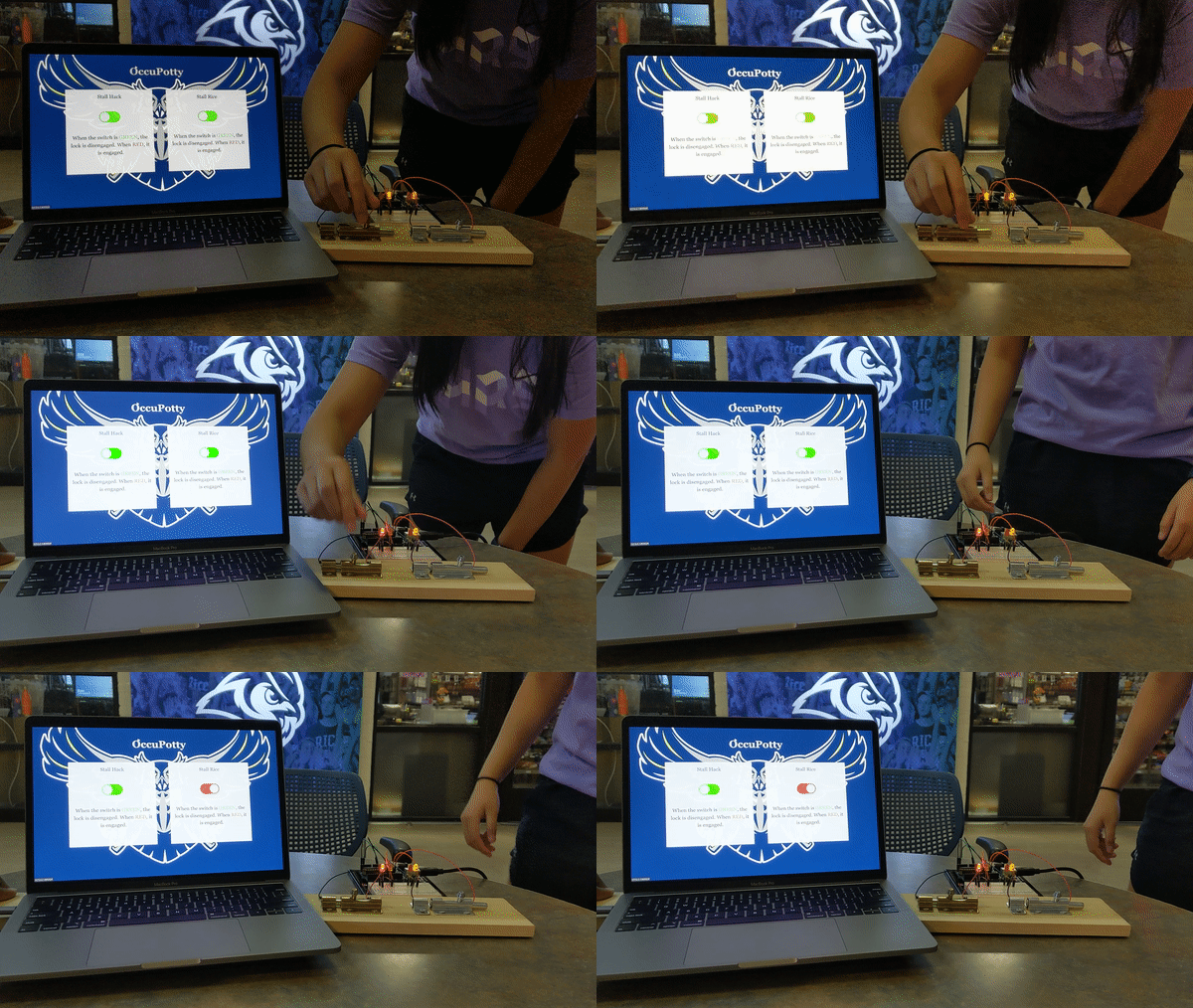
To simulate an engaged and unengaged lock, we bought a plank of wood and attached two sliding locks (one made of zinc and one of brass) to it. Prior to that, CJ and Spence worked on the circuitry of the breadboard to the Arduino and used PyFirmata to make it fully functioning. On the software side, Emily worked on the website design in Bootstrap Studio and Ryan worked on creating the API and configuring the database. Once everything was fully functioning separately, we connected all three components and officially completed a fully functioning lock monitoring system. Below is a demo of what how our system worked:
Ryan Hall - Know-It-All - API/Integration - GitHub
Emily Murphy - Team Dictator - Web Design - GitHub
CJ Sewell - The Chameleon - Electrical System Integration - GitHub
Spence Simmons - T-Sip - Electrical System Integration - GitHub
The biggest challenge we faced on the software side was figuring out how to request data from our database and connect it to our toggle feature on the website. It took lots of researching and trial and error to overcome this challenge.
On the hardware side, CJ and Spence faced a challenge of the vacant light acting on its own accord. After double and triple checking PyFirmata and the circuitry, they overcame the challenge.